
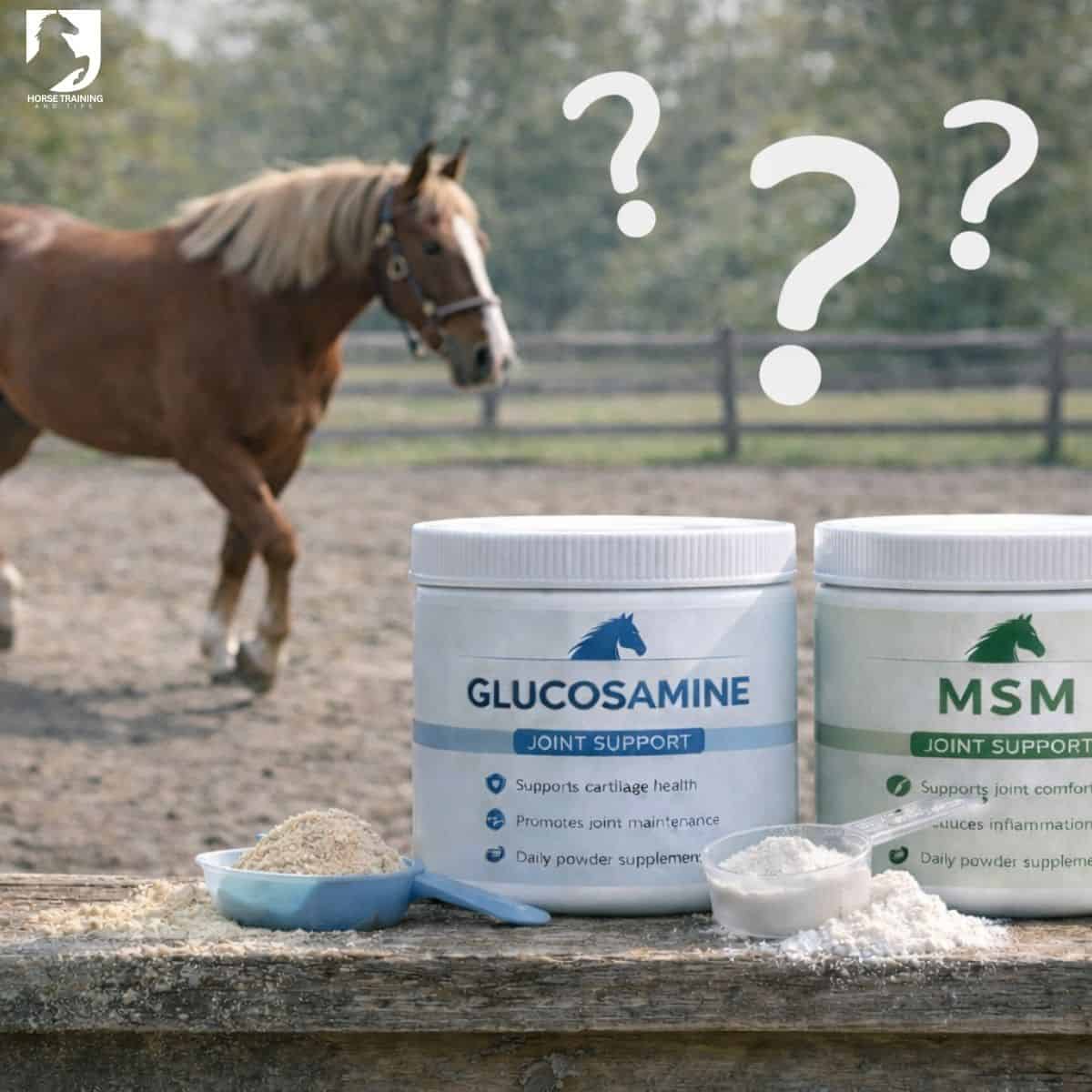
Ask ten horse owners whether joint supplements work, and you’ll probably get ten different answers. Some swear by them, others see no difference at all, and many aren’t sure whether improvements are real or just coincidence.
So do joint supplements actually work for horses?
The honest answer is: sometimes — when used correctly, for the right horse, with realistic expectations.
This article looks at what joint supplements can and can’t do, why results vary so much between horses, and how to tell whether a supplement is genuinely helping or simply masking a problem.
Written by a horse person, for horse people — no hype, no sales talk.
👉 This article supports: Best supplements for horse joints
Why Opinions on Joint Supplements Are So Mixed
Joint supplements sit in a grey area between nutrition and medicine.
Reasons opinions differ include:
- Horses have different joint issues
- Supplements vary hugely in quality and dosage
- Owners expect different outcomes
- Improvements are often subtle
A supplement that helps one horse may do very little for another.
What Joint Supplements Are Designed to Do
Joint supplements are not painkillers and not cures.
They are designed to:
- Support cartilage health
- Reduce low-grade inflammation
- Improve joint lubrication
- Support connective tissue
They work best as long-term support, not emergency treatment.
What Joint Supplements CANNOT Do
It’s just as important to understand their limits.
Joint supplements cannot:
- Reverse advanced arthritis
- Fix poor conformation
- Replace veterinary treatment
- Eliminate severe lameness
If a horse is clearly lame or in pain, supplements alone are not enough.
Why Some Horses Improve and Others Don’t
1. Type of Joint Issue
Supplements are most helpful for:
- Mild stiffness
- Early joint wear
- Age-related changes
They are less effective for:
- Advanced arthritis
- Severe joint damage
- Acute injuries
2. Ingredient Quality and Dosage
One of the biggest reasons supplements “don’t work” is underdosing.
Common problems:
- Token ingredient amounts
- No stated quantities
- Overuse of fillers
A supplement may list glucosamine or MSM but include far too little to have any effect.
👉 Ingredient breakdown: Glucosamine vs MSM for horses
3. Time Given to See Results
Joint supplements take time.
Many owners:
- Stop too early
- Switch products too quickly
- Expect immediate change
👉 Timing guide: How long do joint supplements take to work?
What Research and Practical Experience Suggest
Scientific research on equine supplements is mixed, but practical experience across the horse world shows a consistent pattern:
✔ Correctly dosed supplements
✔ Given consistently
✔ To appropriate horses
👉 often lead to modest but meaningful improvements in comfort and movement.
They are supportive, not miraculous.
Signs a Joint Supplement IS Helping
Look for:
- Easier movement after rest
- Reduced stiffness
- Shorter warm-up time
- More consistent way of going
- Improved willingness to move
Changes are often gradual rather than dramatic.
Signs a Joint Supplement Is NOT the Answer
Reassess if:
- There’s no improvement after 8–10 weeks
- Stiffness worsens
- Lameness appears
- Behaviour changes accompany discomfort
At this point, veterinary input is essential.
Supplements vs Pain Relief: Important Difference
Pain relief (e.g. veterinary-prescribed medication):
- Works quickly
- Masks pain
Joint supplements:
- Work slowly
- Support joint health
Using supplements to avoid addressing pain is not fair on the horse.
Natural vs Traditional Supplements — Does One Work Better?
Both can work when chosen correctly.
Natural options
- Gentler
- Suitable for long-term use
- Often slower acting
👉 Related: Best natural joint supplements for horses
Traditional options
- Often more targeted
- Useful for working or older horses
The best choice depends on the horse, not the label.
Why Management Matters More Than Supplements Alone
Joint supplements work best alongside:
- Regular, appropriate exercise
- Correct farriery
- Weight management
- Good footing
A supplement can’t compensate for poor management.
Are Joint Supplements Worth the Money?
They are worth it when:
- The horse has mild to moderate stiffness
- Ingredients are properly dosed
- Expectations are realistic
They are not worth it if:
- Used instead of proper diagnosis
- Chosen based on marketing
- Underdosed
👉 Decision help: How to choose a horse joint supplement
From One Horse Person to Another
Joint supplements aren’t magic — but they aren’t pointless either. When used thoughtfully, they can make a genuine difference to comfort and mobility, especially in older or working horses.
The key is choosing well, giving them time, and always putting the horse’s welfare first.