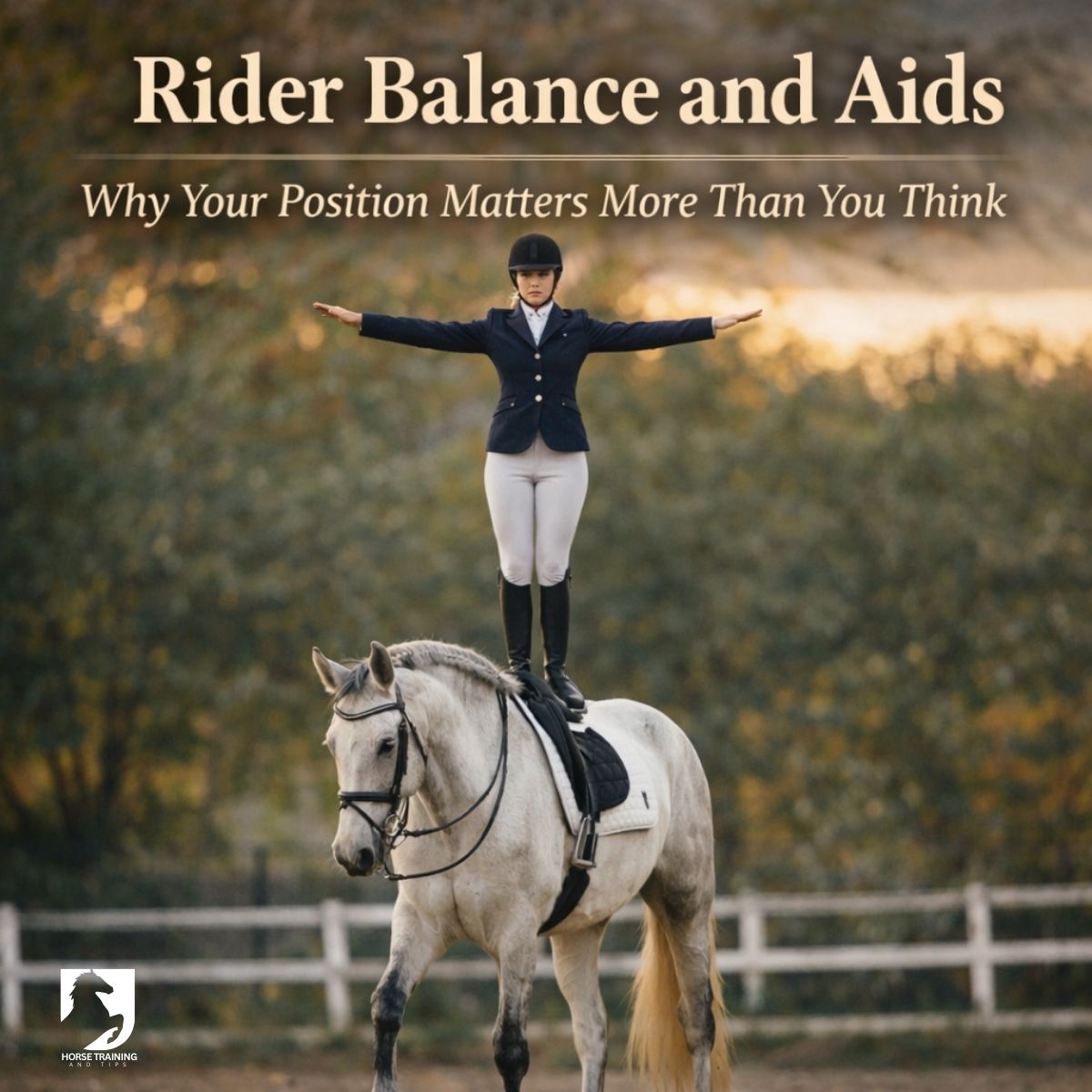
When training problems appear, riders often focus on what the horse is doing wrong. But in many cases, the issue starts higher up — with the rider’s balance, position, or aids.
Horses are extremely sensitive to weight, pressure, and movement. Even small changes in how a rider sits, grips, or uses their hands and legs can completely change how a horse responds. When aids are unclear or balance is inconsistent, horses can become confused, tense, or resistant.
This guide explains why rider balance and aids matter so much, how they influence training, and how small improvements can lead to calmer, clearer responses from your horse.
This article supports:
👉 Horse Training Basics: Practical Training Advice for Everyday Riders
What Are Rider Aids?
Rider aids are the signals used to communicate with the horse.
They include:
- Seat and weight
- Legs
- Hands (reins)
- Voice
- Body position
Good training depends on these aids being clear, consistent, and balanced. When aids contradict each other, the horse struggles to understand what’s being asked.
Why Balance Comes Before Technique
A rider doesn’t need to be perfect — but they do need to be balanced.
Poor balance often shows up as:
- Gripping with the knees
- Leaning forward or back
- Collapsing through one side
- Using reins for balance
When balance is off, the horse compensates, which can lead to:
- Tension
- Loss of rhythm
- Resistance
- Training plateaus
How Horses Feel the Rider’s Weight
Horses feel:
- Shifts in weight immediately
- Uneven pressure through the saddle
- Sudden movements
An unbalanced rider can feel uncomfortable or unpredictable to a horse, especially during:
- Transitions
- Mounting
- Standing still
- Turning
👉 Related reading:
Does Saddle Fit Affect Mounting Behaviour?
Conflicting Aids: A Common Training Problem
One of the most common issues is conflicting aids, such as:
- Legs asking the horse to move forward while hands restrict movement
- Seat asking the horse to slow while legs ask for more energy
To the horse, this feels confusing rather than corrective.
Clear aids work together — not against each other.
The Role of the Seat in Training
The seat is one of the most powerful training aids.
A balanced seat:
- Encourages relaxation
- Supports rhythm
- Improves transitions
- Reduces reliance on reins
Many horses respond better when riders focus on sitting quietly rather than doing more.
Why Mounting Highlights Rider Balance Issues
Mounting is one of the clearest moments where balance issues show up.
A horse may:
- Walk off
- Brace
- Tense through the back
Often this is due to:
- Sudden weight shifts
- Pulling on the saddle or reins
- Unstable mounting technique
👉 Related reading:
Horse Won’t Stand Still for Mounting? Causes and Simple Fixes
Improving Aids Without Overthinking
You don’t need advanced training to improve your aids.
Helpful steps include:
- Riding without stirrups occasionally
- Focusing on breathing
- Practising smooth transitions
- Keeping movements minimal
Small improvements make a big difference.
Rider Tension and Horse Behaviour
Horses often mirror rider tension.
A tense rider may create:
- Shortened strides
- Resistance
- Loss of confidence
Learning to stay relaxed helps the horse relax too.
Training Is a Two-Way Conversation
Good training isn’t about making the horse comply — it’s about communication.
When riders improve clarity and balance:
- Horses respond more willingly
- Training becomes calmer
- Behaviour issues often reduce naturally
This is why many “horse problems” improve when the rider changes slightly.
When to Seek Help
Professional help can be valuable if:
- You feel unbalanced
- Training has plateaued
- Behaviour issues persist
A good instructor improves the rider first — not just the horse.
From One Horse Person to Another
Improving your riding doesn’t mean doing more — it often means doing less, but more clearly. When your balance is steady and your aids make sense, your horse can relax, understand, and respond with confidence.
Small changes in the saddle can transform training on the ground and under saddle.