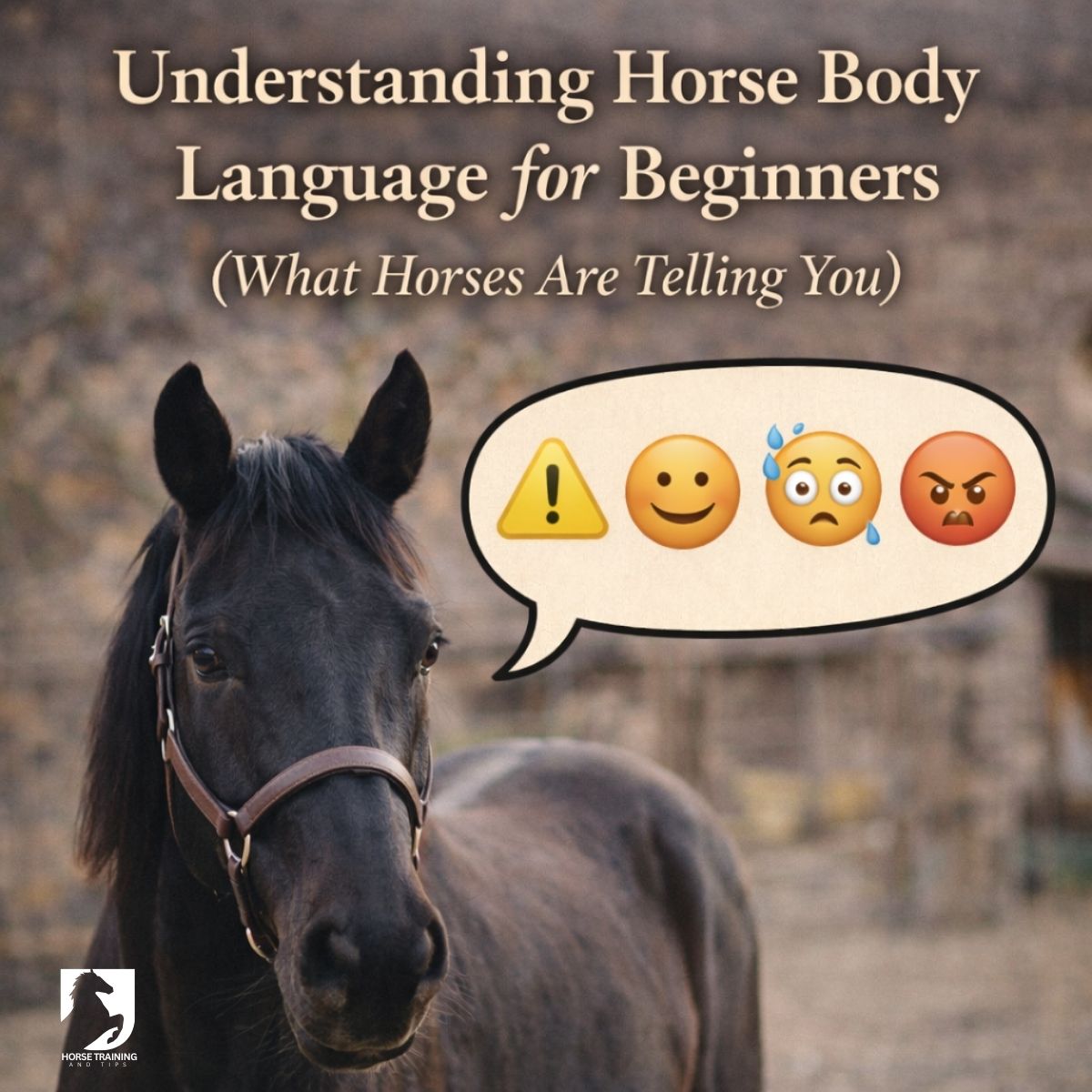
One of the biggest breakthroughs for new horse owners happens when they realise that horses are communicating all the time — just not with words. Long before a horse reacts, spooks, refuses, or becomes unsettled, they usually give subtle signals through body language.
For beginners, these signals are easy to miss. Many owners only notice behaviour once it becomes obvious, such as pulling away, stepping sideways, or refusing to cooperate. Learning to read horse body language early helps you stay safe, build confidence, and prevent small issues from turning into bigger problems.
This guide explains horse body language for beginners, using clear, practical examples you’ll see every day around the yard.
This article supports:
👉 Beginner Horse Care Guide: Simple, Confidence-Building Advice for New Owners
Why Understanding Body Language Matters
Horses are prey animals. Their survival depends on noticing danger early and responding quickly. Because of this, horses communicate discomfort, uncertainty, and relaxation through their bodies rather than vocal sounds.
Understanding body language helps you:
- Stay safer around horses
- Spot stress before it escalates
- Adjust your handling calmly
- Build trust and confidence
Most “sudden” reactions aren’t sudden at all — they’re the result of signals being missed.
Relaxed vs Tense Horses: The Big Picture
Before focusing on individual signals, look at the whole horse.
A relaxed horse often shows:
- Soft eyes
- Ears gently moving or forward
- A lowered or level head
- Even weight on all four feet
- Slow, calm movements
A tense horse may show:
- Tight muscles
- Fixed or wide eyes
- A raised head and neck
- Shifting weight
- Short, quick movements
Learning to recognise this overall picture helps you decide whether to proceed, pause, or slow things down.
Understanding Horse Ears
Ears are one of the easiest places to start.
Common ear positions:
- Forward: Interested or attentive
- Relaxed to the side: Calm and comfortable
- Flicking back and forth: Paying attention to surroundings
- Pinned flat back: Irritated, uncomfortable, or warning
Pinned ears don’t always mean aggression — they can indicate discomfort, confusion, or frustration. Beginners should treat pinned ears as a sign to pause and reassess.
What the Eyes Can Tell You
A horse’s eyes reveal a lot about how they’re feeling.
Look for:
- Soft, blinking eyes: Relaxed
- Wide eyes with visible white: Alert, anxious, or frightened
- Fixed stare: Tension or focus on a perceived threat
Changes in the eyes often appear before physical movement, making them an early warning sign.
Head and Neck Position
The position of the head and neck gives strong clues about a horse’s emotional state.
Common signs:
- Lowered head: Relaxation or rest
- High, rigid head: Alertness or tension
- Sudden head raising: Startle or fear
A horse that repeatedly raises their head during handling may be feeling unsure or overwhelmed.
Legs and Feet: Subtle but Important Signals
Many beginners overlook what a horse is doing with their feet.
Signs to watch:
- Standing evenly: Calm and settled
- Shifting weight: Uncertainty or discomfort
- Pawing: Impatience, stress, or anticipation
- Stepping away quietly: Seeking space
Feet movement often signals how close a horse is to moving suddenly.
The Tail: More Than Just Flies
Tail movement can also provide useful information.
- Loose, relaxed tail: Calm
- Clamped tail: Anxiety or discomfort
- Fast swishing: Irritation or tension
While flies can cause tail movement, repeated or aggressive swishing often means something else is bothering the horse.
Body Language During Handling
Handling situations reveal a lot about how a horse is feeling.
During leading:
- Walking calmly beside you = relaxed
- Rushing ahead or lagging behind = uncertainty or lack of clarity
During grooming:
- Relaxed posture = comfortable
- Tension, tail swishing, pinned ears = sensitivity or discomfort
👉 Related reading:
Basic Horse Handling for Beginners (Staying Safe and Confident)
Body Language and Safety
Many accidents happen because early signals were missed.
Common warning signs before reactions include:
- Freezing
- Tensing muscles
- Fixing ears or eyes
- Shifting weight
If you notice these signs:
- Pause
- Breathe
- Give the horse time
Stepping back early is safer than reacting late.
Why Horses Sometimes “Overreact”
From a horse’s point of view, reacting quickly keeps them alive. What feels like an overreaction to us may feel necessary to them.
Beginners should remember:
- Horses don’t reason like humans
- Calm handling reduces reactivity
- Understanding signals builds trust
How Body Language Helps Beginners Build Confidence
When you understand what your horse is saying:
- You feel more in control
- Situations feel less unpredictable
- Handling becomes calmer
Confidence doesn’t come from control — it comes from understanding.
Common Beginner Mistakes When Reading Body Language
These are very common and completely normal:
- Ignoring small signals
- Assuming quiet means relaxed
- Continuing when a horse is clearly tense
Learning to notice and respond calmly is part of becoming a good horse person.
When to Ask for Help
If a horse consistently shows:
- Tension
- Fear
- Sudden reactions
Ask for help from an experienced handler, instructor, or professional. Early guidance prevents long-term problems.
From One Horse Person to Another
Horses are always communicating — we just have to learn how to listen. The more attention you pay to body language, the safer, calmer, and more confident you’ll feel around horses.
Understanding your horse doesn’t happen overnight, but every calm interaction builds that connection.