
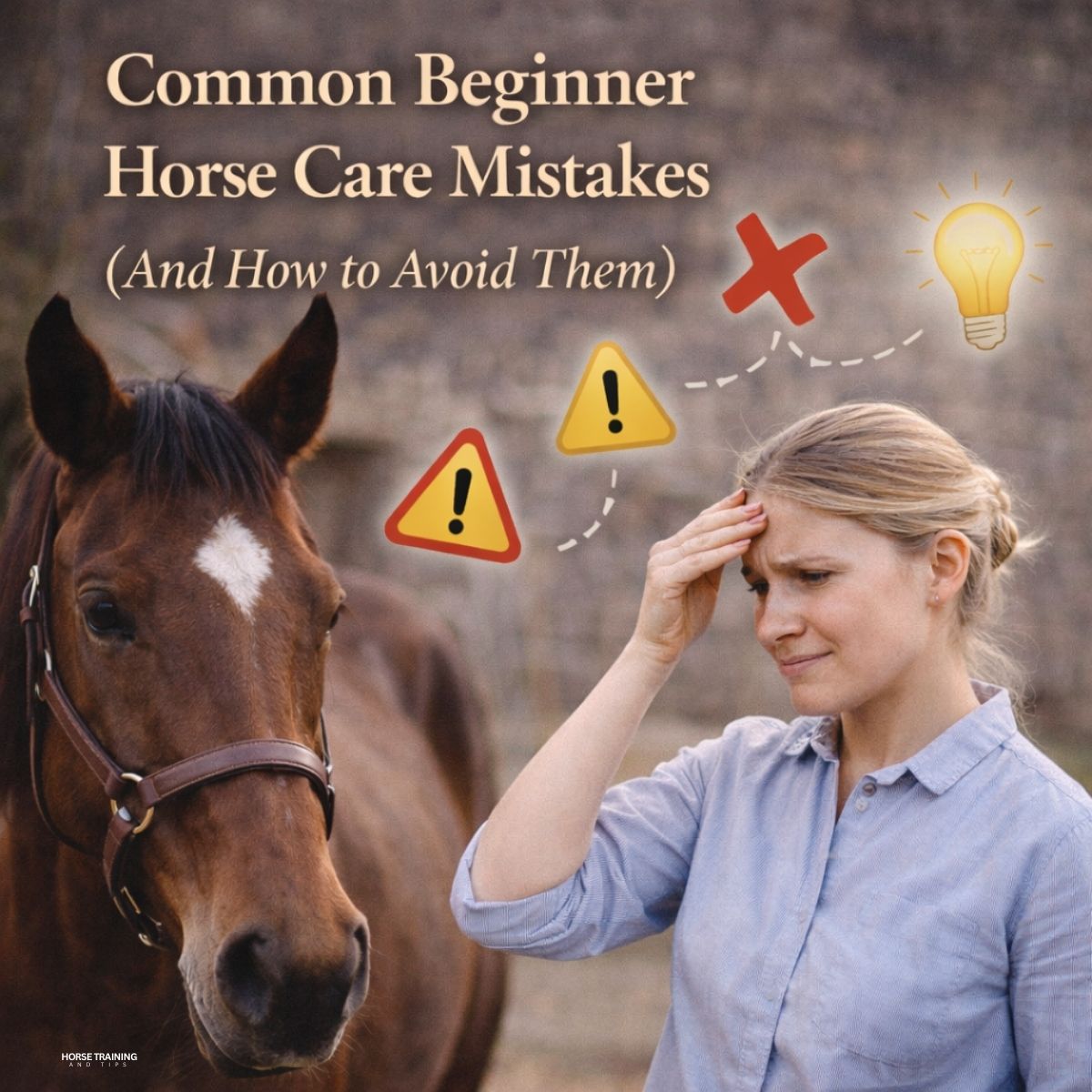
Every horse owner — no matter how experienced — started as a beginner. Making mistakes is not a sign that you’re doing a bad job; it’s part of learning how to care for horses responsibly. The problem isn’t making mistakes — it’s repeating the same ones without understanding why they happen.
Many beginner horse care mistakes come from good intentions: wanting to do the best, listening to too many opinions, or trying to fix things quickly. With horses, however, slow, steady, and consistent care nearly always works better.
This guide covers the most common beginner horse care mistakes, why they happen, and how to avoid them calmly and confidently.
This article supports:
👉 Beginner Horse Care Guide: Simple, Confidence-Building Advice for New Owners
Mistake 1: Trying to Do Too Much, Too Soon
New owners often feel pressure to “do everything right” immediately.
This can look like:
- Changing feed straight away
- Adding multiple supplements
- Starting intense training quickly
- Constantly adjusting routines
Horses cope best with stability. Too many changes at once can cause stress, digestive upset, and behavioural issues.
How to avoid it
- Change one thing at a time
- Give each change time to settle
- Focus on routine first
Consistency builds confidence for both horse and owner.
Mistake 2: Changing Feed Too Quickly
Sudden feed changes are one of the most common beginner mistakes — and one of the most risky.
Rapid changes can lead to:
- Digestive upset
- Weight changes
- Increased colic risk
How to avoid it
- Introduce new feeds gradually over 7–14 days
- Mix old and new feed slowly
- Keep forage consistent whenever possible
👉 Related reading:
Feeding Horses for Beginners
Mistake 3: Overfeeding Concentrates
Many beginners assume horses need hard feed to stay healthy. In reality, many leisure horses need very little concentrate feed.
Overfeeding can cause:
- Excess energy
- Weight gain
- Digestive problems
- Behaviour changes
How to avoid it
- Prioritise forage
- Feed concentrates only if there’s a clear reason
- Monitor body condition regularly
Simple diets are often the healthiest.
Mistake 4: Ignoring Small Behaviour Changes
Subtle behaviour changes are often the first sign that something isn’t right.
Beginners sometimes dismiss signs like:
- Mild grumpiness
- Reduced appetite
- Standing slightly differently
- Lack of enthusiasm
How to avoid it
- Pay attention to “small” changes
- Trust your instincts
- Ask questions early
👉 Related reading:
Understanding Horse Body Language for Beginners
Mistake 5: Assuming Quiet Means Relaxed
A quiet horse is not always a relaxed horse.
Some horses:
- Shut down when stressed
- Freeze instead of reacting
- Appear calm while feeling tense
How to avoid it
- Look at the whole horse, not just behaviour
- Watch ears, eyes, posture, and movement
- Learn to spot tension early
Understanding body language keeps you safer and helps prevent problems.
Mistake 6: Inconsistent Handling Rules
Allowing behaviour sometimes and correcting it at other times creates confusion.
This often shows up as:
- Pushing into personal space
- Walking off during handling
- Inconsistent responses
How to avoid it
- Set clear boundaries
- Apply them calmly every time
- Make sure everyone handling the horse follows the same rules
👉 Related reading:
Basic Horse Handling for Beginners
Mistake 7: Skipping Routine Health Care Awareness
Even if professionals do the work, beginners should understand basic care routines.
Missing or delaying:
- Farrier visits
- Dental checks
- Worming
- Vaccinations
can lead to bigger issues later.
How to avoid it
- Keep a simple care schedule
- Ask your vet or farrier to explain what they’re doing
- Learn what’s normal for your horse
Knowledge builds confidence.
Mistake 8: Comparing Your Horse to Others
Social media and busy yards make comparison easy — and unhelpful.
Every horse:
- Has different needs
- Learns at a different pace
- Responds to care differently
How to avoid it
- Focus on your horse’s progress
- Ignore pressure to rush
- Trust steady improvement
Good care isn’t a competition.
Mistake 9: Not Asking for Help Early Enough
Many beginners wait too long before asking for help because they worry about being judged.
In reality:
- Early help prevents bigger problems
- Experienced owners expect questions
- Good advice builds confidence
How to avoid it
Ask for help when:
- Something feels off
- You feel unsure
- Safety is affected
Responsible ownership includes knowing when to ask.
Mistake 10: Being Too Hard on Yourself
Perhaps the most common beginner mistake is believing you should already “know better”.
Horse care is learned over time through:
- Experience
- Observation
- Mistakes
How to avoid it
- Be patient with yourself
- Learn from each situation
- Remember every expert was once a beginner
How to Learn Without Feeling Overwhelmed
The best beginner strategy:
- Learn a little at a time
- Stick to reliable sources
- Avoid advice overload
Simple, consistent care usually beats complicated plans.
Building Confidence Through Routine
Confidence grows from:
- Predictable routines
- Understanding your horse’s normal behaviour
- Repeating simple tasks calmly
Routine helps you notice change early and respond appropriately.
When Beginner Mistakes Become Learning Opportunities
Every mistake teaches you something:
- About your horse
- About yourself
- About what works
The goal isn’t perfection — it’s progress.
From One Horse Person to Another
If you care enough to worry about making mistakes, you’re already on the right path. Good horse care comes from attention, consistency, and willingness to learn — not from knowing everything straight away.
Slow down, keep things simple, and trust that confidence will grow with time.