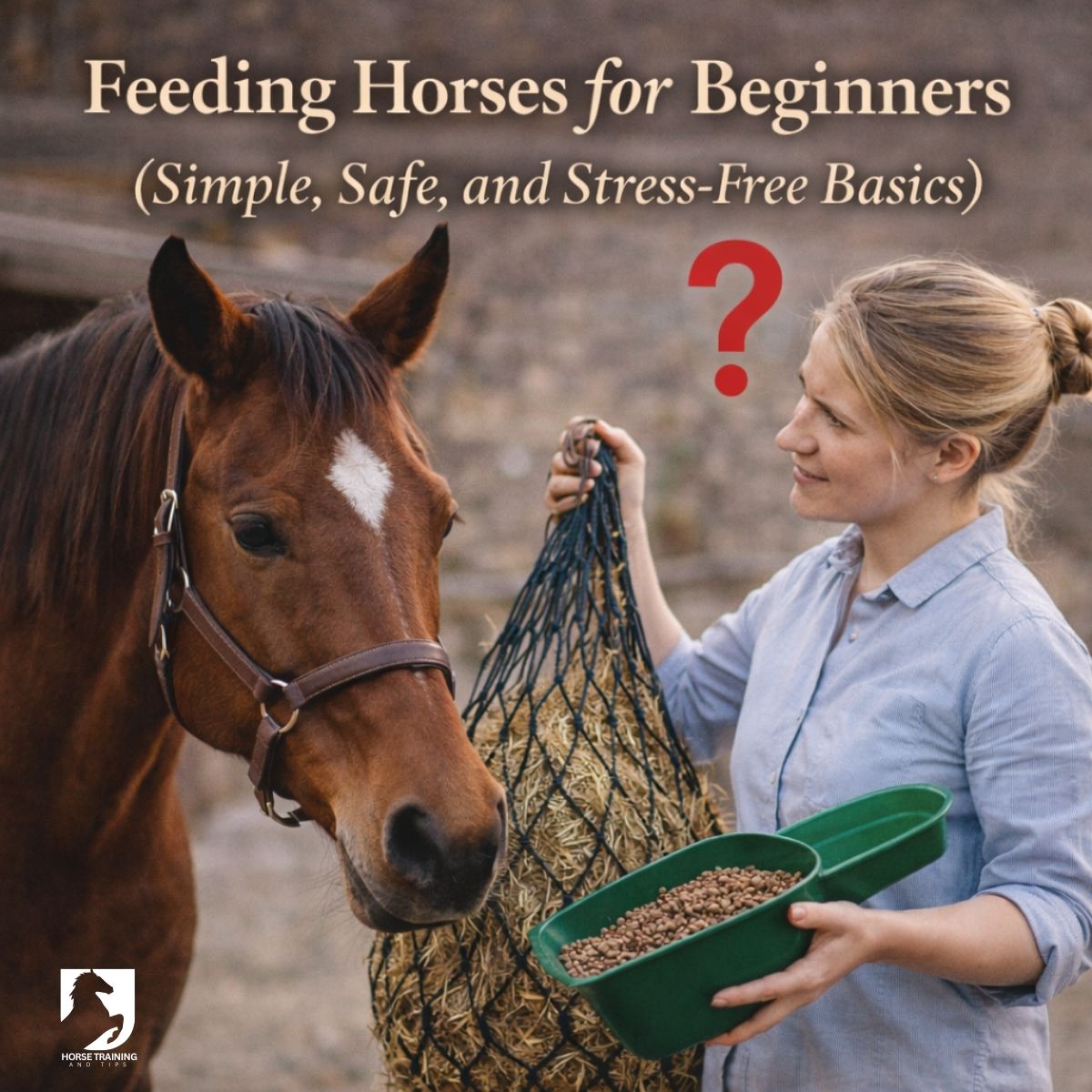
Feeding is one of the areas new horse owners worry about most — and with good reason. There is a lot of conflicting advice, long ingredient lists, and strong opinions about what horses should or shouldn’t eat. For beginners, this can quickly become overwhelming.
The truth is that feeding horses does not need to be complicated. Most feeding problems come from overthinking, sudden changes, or unnecessary additions rather than from doing too little.
This guide explains feeding horses for beginners, focusing on simple, safe principles that support health, digestion, and calm behaviour — without pressure to get everything perfect.
This article supports:
👉 Beginner Horse Care Guide: Simple, Confidence-Building Advice for New Owners
The Golden Rule of Feeding Horses
If there is one rule every beginner should remember, it’s this:
Horses are designed to eat forage for most of the day.
Everything else is secondary.
A horse’s digestive system works best when:
- Fibre intake is high
- Meals are consistent
- Changes are gradual
Many feeding problems start when this natural system is disrupted.
Understanding the Horse’s Digestive System (Simply)
Horses have:
- A small stomach
- A long, sensitive digestive tract
- No ability to vomit
This means:
- Large meals can cause problems
- Sudden changes can upset digestion
- Consistency matters more than variety
Feeding little and often — or allowing steady forage intake — supports gut health and reduces stress.
Forage: The Foundation of Every Diet
Forage should make up the majority of a horse’s diet, regardless of age or workload.
Forage includes:
- Hay
- Haylage
- Grass
Good forage supports:
- Digestive health
- Mental wellbeing
- Weight management
As a beginner, focusing on forage quality and availability is far more important than choosing the “perfect” feed mix.
How Much Forage Does a Horse Need?
As a general guideline:
- Horses should eat around 1.5–2% of their body weight in forage per day
For many horses, this means:
- Near-constant access to forage
- Minimal periods without food
Long gaps without forage increase the risk of digestive issues and unwanted behaviour.
Hard Feed: When Is It Needed?
Not all horses need hard feed.
Hard feed may be appropriate if a horse:
- Is in regular work
- Struggles to maintain weight
- Has specific nutritional needs
Many leisure horses do very well on:
- Forage
- A balancer or mineral supplement (if needed)
Overfeeding concentrates is one of the most common beginner mistakes.
Feeding for Beginners: Keep It Simple
Beginner-friendly feeding principles:
- Change feeds slowly (7–14 days)
- Avoid mixing multiple feeds unnecessarily
- Stick to one clear feeding plan
- Monitor body condition regularly
Simple diets are easier to manage and less likely to cause digestive upset.
Understanding Feed Labels (Without Overthinking)
Feed labels can look intimidating, but beginners don’t need to understand every ingredient.
Focus on:
- Fibre content
- Sugar and starch levels
- Intended purpose of the feed
If you’re unsure, ask:
“What problem is this feed solving?”
If there’s no clear answer, you may not need it.
Water: The Most Overlooked Part of Feeding
Water is more important than any feed.
Always ensure:
- Clean water is available
- Buckets and troughs are checked daily
- Water isn’t frozen in winter
Poor water intake is a major risk factor for digestive problems.
👉 Related reading:
Signs of Colic in Horses
Feeding and Digestive Health
Good feeding supports:
- Regular droppings
- Comfortable digestion
- Steady energy levels
Warning signs that feeding may need review include:
- Changes in droppings
- Loss of appetite
- Weight changes
- Behaviour changes
👉 Related reading:
Early Signs of Mild Colic in Horses
Supplements: Do Beginners Need Them?
Many beginners feel pressure to add supplements, but most horses don’t need them immediately.
Supplements may help if:
- A deficiency has been identified
- The horse has specific needs
- Advised by a professional
Adding supplements “just in case” often causes more confusion than benefit.
Common Beginner Feeding Mistakes
These are extremely common — and fixable:
- Changing feeds too quickly
- Overfeeding concentrates
- Adding multiple supplements at once
- Chasing advice from too many sources
Consistency beats complexity every time.
Feeding and Behaviour
Feeding affects behaviour more than many beginners realise.
Too much energy or sudden changes can lead to:
- Tension
- Excitability
- Digestive discomfort
A calm feeding routine often supports calmer behaviour overall.
Feeding Older Horses (Beginner Awareness)
As horses age, their needs may change.
Older horses may:
- Need easier-to-chew forage
- Lose weight more easily
- Benefit from consistency
Always adjust feeding gradually and monitor closely.
How Often Should You Feed?
Ideally:
- Forage should be available most of the time
- Hard feed should be split into small meals
Long gaps between meals increase stress on the digestive system.
When to Ask for Feeding Advice
Ask for help if:
- Your horse loses or gains weight quickly
- Appetite changes suddenly
- Digestive issues appear
- You feel unsure or overwhelmed
Good advice simplifies feeding — it doesn’t complicate it.
From One Horse Person to Another
Feeding horses doesn’t need to be perfect — it needs to be consistent, calm, and appropriate for the horse in front of you. Focus on forage, make changes slowly, and trust that simple routines often work best.
With time, feeding will feel far less stressful and far more intuitive.