
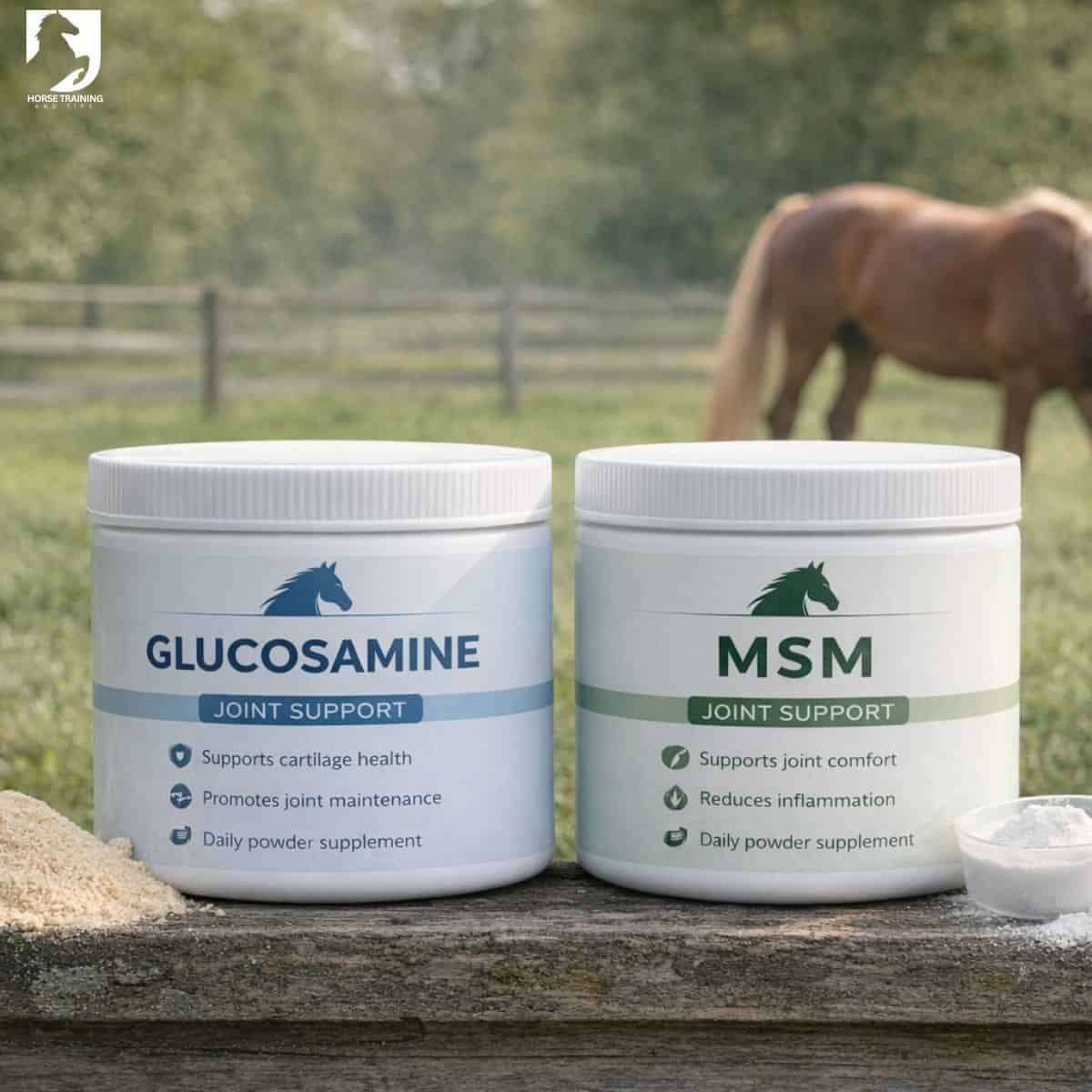
If you’ve ever looked at joint supplements for horses, you’ve almost certainly seen glucosamine and MSM mentioned — often together, sometimes separately, and frequently with bold claims.
Many owners are left wondering:
- Do horses need both?
- Is one better than the other?
- Am I paying for ingredients my horse doesn’t actually need?
This guide breaks down glucosamine vs MSM for horses, explaining what each ingredient does, when they’re most useful, and how to decide which option suits your horse best.
Written by a horse person, for horse people — no hype, just clear explanation.
👉 This article supports: Best supplements for horse joints
Why These Two Ingredients Are So Common
Glucosamine and MSM are popular because they:
- Are relatively affordable
- Are widely researched
- Support joint comfort in different ways
However, they work very differently, which is why understanding the difference matters.
What Is Glucosamine?
Glucosamine is a naturally occurring compound found in:
- Cartilage
- Synovial fluid
- Connective tissue
In supplements, it’s usually derived from shellfish or synthetic sources.
What glucosamine does:
- Supports cartilage structure
- Helps maintain joint integrity
- Supports long-term joint health
Glucosamine is about joint support and maintenance, not fast pain relief.
Types of Glucosamine (This Matters)
Not all glucosamine is the same.
Common forms include:
- Glucosamine sulphate (generally preferred)
- Glucosamine hydrochloride
Glucosamine sulphate is often better supported by research and may be more effective.
Always check which form is used — many labels don’t make this clear.
What Is MSM?
MSM (Methylsulfonylmethane) is a naturally occurring sulphur compound.
Sulphur plays an important role in:
- Connective tissue
- Joint comfort
- Inflammatory response
MSM is often used to support comfort rather than structure.
What MSM Does in Horses
MSM helps:
- Reduce inflammation
- Support joint comfort
- Support soft tissue health
Owners often report:
- Improved comfort
- Easier movement
- Reduced stiffness
MSM tends to work faster than glucosamine, though its effects are usually more about comfort than long-term joint structure.
Glucosamine vs MSM: Key Differences
| Feature | Glucosamine | MSM |
|---|---|---|
| Primary role | Cartilage support | Comfort & inflammation |
| Speed of effect | Slow (weeks) | Faster (days–weeks) |
| Best for | Long-term support | Mild stiffness & soreness |
| Structural support | Yes | No |
| Pain relief | Indirect | More noticeable |
This is why many supplements combine both.
When Glucosamine Is the Better Choice
Glucosamine may be more suitable if your horse:
- Is older
- Has early joint wear
- Needs long-term joint maintenance
- Is still in regular work
It’s particularly useful as part of a preventative approach.
When MSM Is the Better Choice
MSM may be more suitable if your horse:
- Has mild stiffness
- Feels tight after work
- Needs comfort support
- Is sensitive to stronger supplements
MSM is often chosen for:
- Older horses in light work
- Horses returning to work
- Seasonal stiffness
Do Horses Need Both?
Many horses benefit from a combination of glucosamine and MSM because they:
- Support joints in different ways
- Complement each other
- Cover both structure and comfort
However, not every horse needs both — and not every product contains effective levels of either.
The Importance of Dosage (More Important Than Brand)
One of the biggest issues with joint supplements is underdosing.
A supplement can list glucosamine or MSM on the label, but:
- The amount may be too low to matter
- The ingredient may be included only for marketing
Always look for:
- Clear ingredient quantities
- Daily dose information
If it doesn’t say how much is included, assume it’s minimal.
Powder vs Liquid Supplements
Powders
- Often better value
- Easier to measure accurately
- Can be refused by fussy horses
Liquids
- Often absorbed quickly
- Easier for some horses to eat
- Can be more expensive
The best option is the one your horse will eat consistently.
How Long Before You See Results?
- MSM: often 2–4 weeks
- Glucosamine: usually 4–8 weeks
If you expect overnight changes, you’ll likely be disappointed.
👉 Timing guide: How long do joint supplements take to work?
Can Glucosamine or MSM Replace Veterinary Treatment?
No.
Supplements:
- Support joint health
- Do not diagnose or treat disease
- Should not replace veterinary advice
If your horse shows persistent lameness or pain, always consult your vet.
Choosing Between Glucosamine, MSM, or Both
Ask yourself:
- Is this for long-term joint support or short-term comfort?
- Does my horse have diagnosed joint wear?
- Am I seeing stiffness or soreness?
👉 Decision help: How to choose a horse joint supplement
From One Horse Person to Another
Glucosamine and MSM both have their place — but they’re not interchangeable. Understanding what each ingredient does helps you choose a supplement that actually suits your horse, rather than paying for a label.
Joint support works best when expectations are realistic and management is good.