
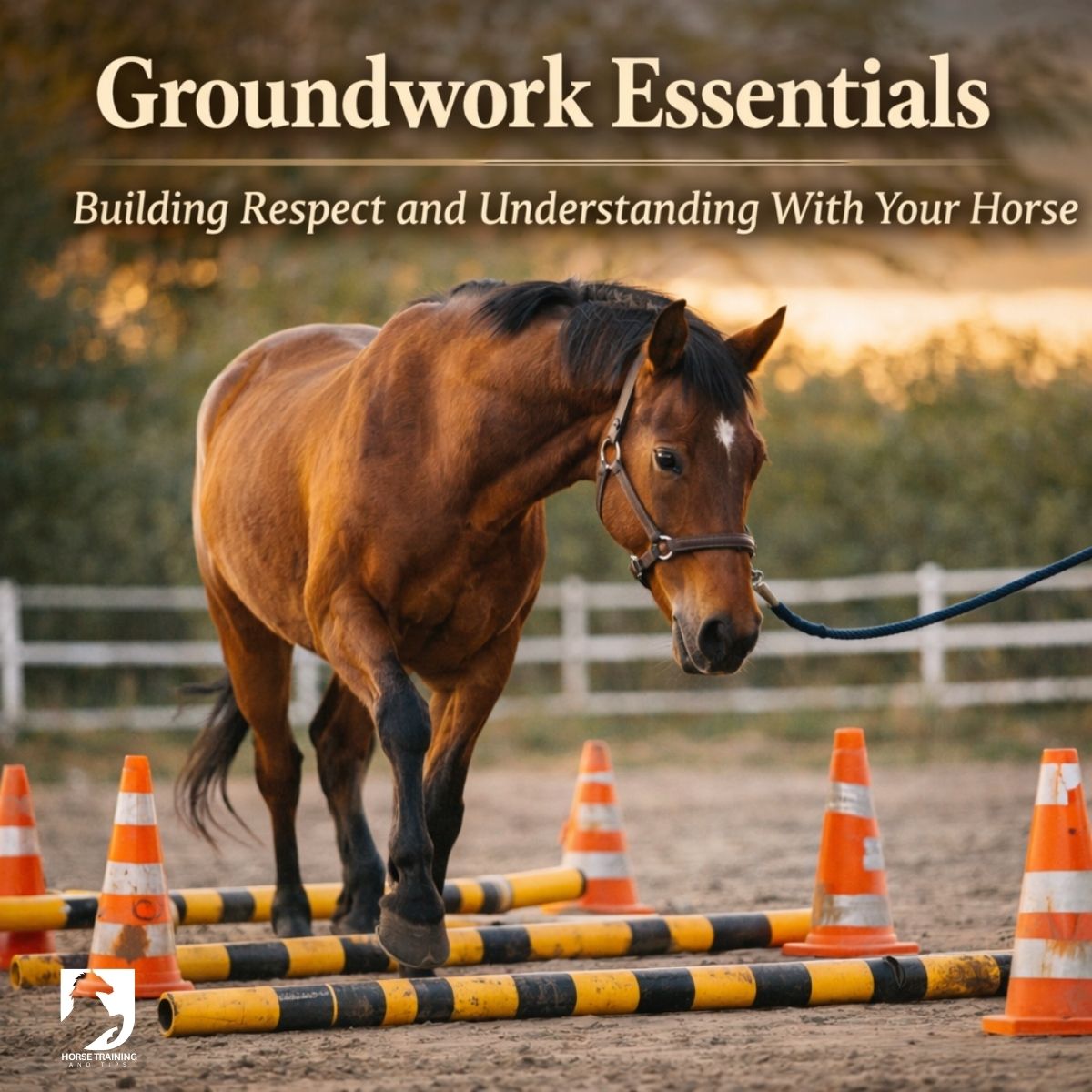
Groundwork is often misunderstood. Some riders see it as something you do with young horses, while others think it’s only necessary when problems arise. In reality, good groundwork is one of the most important foundations of horse training, no matter a horse’s age or experience.
Groundwork isn’t about dominance or making a horse “respect” you through force. It’s about teaching clear responses, building calm communication, and helping your horse feel confident and secure in everyday situations.
This guide explains the groundwork essentials every horse should understand, why they matter, and how they improve both safety and ridden training.
This article supports:
👉 Horse Training Basics: Practical Training Advice for Everyday Riders
What Groundwork Really Means
Groundwork refers to training done from the ground, without riding, where the horse learns to respond calmly and consistently to cues.
Good groundwork teaches a horse:
- How to respond to light pressure
- How to stay focused on the handler
- How to move, stop, and stand quietly
- How to stay calm in close proximity to people
These skills transfer directly into better behaviour under saddle.
Why Groundwork Matters So Much
Many training problems under saddle begin on the ground.
Poor groundwork often shows up as:
- Walking off during mounting
- Rushing or dragging when led
- Fidgeting while standing
- Pushing into personal space
- Anxiety during handling
When groundwork is clear, ridden work becomes far easier and calmer.
👉 Related reading:
Horse Won’t Stand Still for Mounting? Causes and Simple Fixes
The Difference Between Control and Understanding
Groundwork should never be about overpowering a horse.
Control relies on:
- Strength
- Equipment
- Constant correction
Understanding relies on:
- Clear cues
- Timing
- Consistent release
Horses trained with understanding are calmer, safer, and more reliable — even in new environments.
Essential Groundwork Skills Every Horse Should Have
1. Standing Still When Asked
Standing quietly is one of the most important and underrated skills.
A horse that can stand:
- Is safer to handle
- Mounts more easily
- Shows better focus
This skill should be practised calmly and rewarded with release, not force.
2. Leading Calmly Beside You
A well-led horse:
- Walks beside you, not ahead or behind
- Stops when you stop
- Responds to light pressure
Pulling, barging, or lagging usually means the horse doesn’t fully understand the request yet.
3. Responding to Light Pressure
Horses learn through pressure and release.
Good groundwork teaches the horse to:
- Respond to the lightest cue possible
- Seek the release rather than resist
This builds softness and understanding that carries into ridden work.
👉 Supporting reading:
How Horses Learn: The Basics of Training and Behaviour
4. Respecting Personal Space (Without Fear)
Respect doesn’t come from intimidation.
A horse should:
- Be aware of your space
- Move when asked
- Stay relaxed, not tense
Fear-based reactions create anxiety, not respect.
Why Rushing Groundwork Causes Problems Later
Skipping groundwork or rushing it often leads to:
- Inconsistent responses
- Confusion
- Behaviour labelled as “naughty”
Groundwork doesn’t need to take long — but it does need to be clear and consistent.
Even five minutes of focused groundwork can prevent weeks of frustration later.
Groundwork and Behaviour Problems
Groundwork often improves:
- Mounting issues
- Spookiness
- Fidgeting
- Tension during transitions
This is because groundwork builds clarity and confidence before pressure is added through riding.
👉 Related reading:
Why Horses Walk Off When You Mount
How Often Should You Do Groundwork?
Groundwork doesn’t have to be a separate session every time.
It can be:
- A few minutes before riding
- Part of leading or grooming
- Used to reset focus
Regular, short sessions are far more effective than occasional long ones.
Common Groundwork Mistakes
Avoid:
- Using too much pressure
- Correcting without clarity
- Inconsistency between handlers
- Expecting instant results
Groundwork should feel calm and almost boring when it’s working well.
When to Get Help With Groundwork
Professional help is useful if:
- You feel unsafe
- The horse shows fear or aggression
- Behaviour escalates
- You’re unsure about timing or technique
A good trainer will prioritise clarity and welfare, not control.
From One Horse Person to Another
Groundwork isn’t about proving anything — it’s about building understanding. When a horse knows what’s being asked and feels comfortable responding, training becomes calmer, safer, and far more enjoyable.
Strong groundwork creates confident horses and confident handlers — and that benefits everything you do together.