
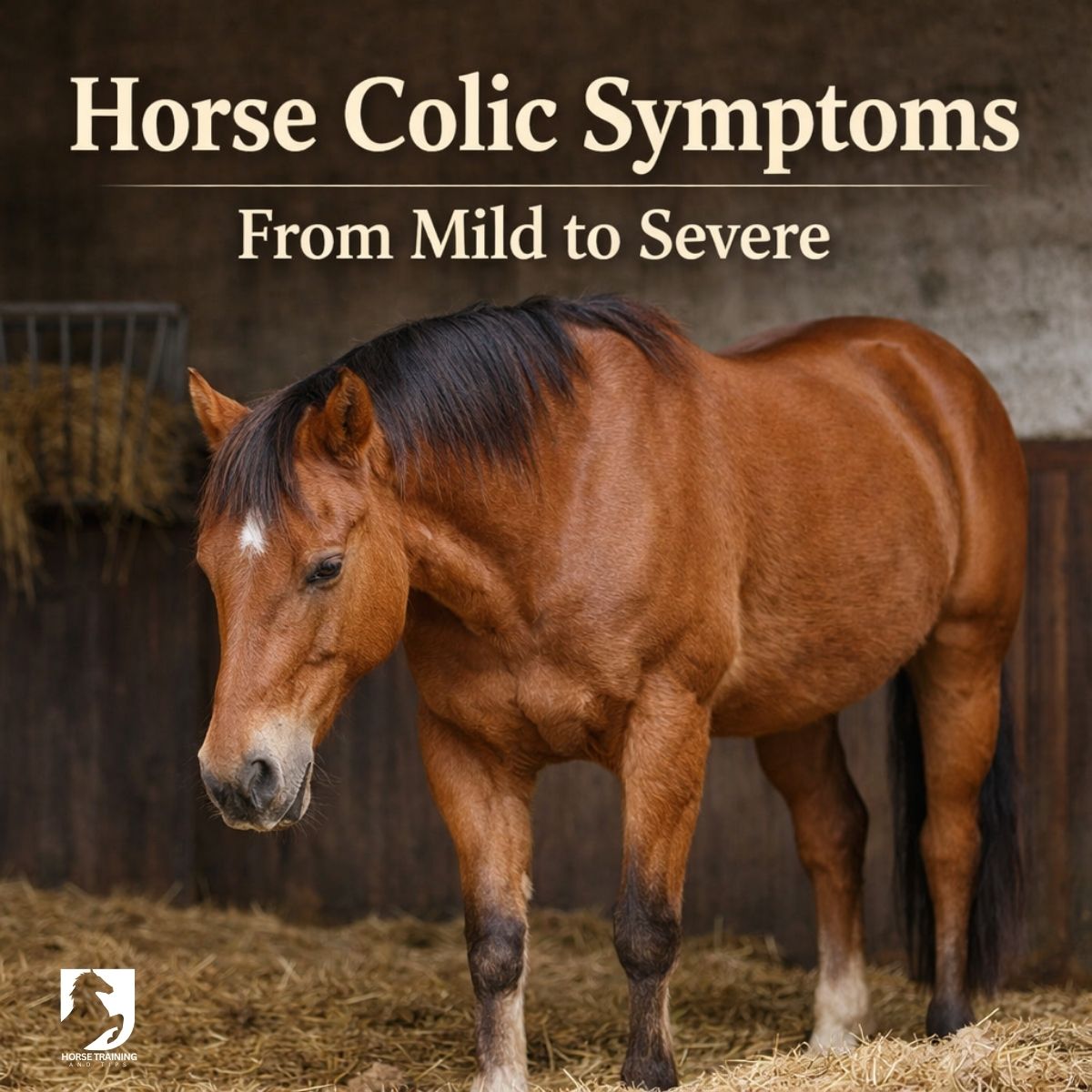
Colic is one of those words that instantly makes horse owners uneasy — and for good reason. It’s one of the most common reasons for emergency vet call-outs, yet it’s also one of the most misunderstood problems on UK yards. One of the hardest parts is that colic doesn’t always look dramatic at first. Many cases start quietly, with small changes that are easy to miss — especially if you’re newer to horses or you don’t see your horse all day.
This guide explains horse colic symptoms in a clear, practical way — from mild signs owners often miss, through to severe symptoms that need urgent veterinary attention. If you want the full overview first, start here: Signs of Colic in Horses: A Practical Guide for Horse Owners.
What “colic” means (and why symptoms vary so much)
“Colic” isn’t one single disease. It’s a general term that means abdominal pain. That pain can come from many different causes — gas build-up, gut spasms, mild impactions, dehydration, changes in diet, stress, ulcers, or more serious problems like displacement or twisting.
Because the causes vary, the symptoms vary too. Some horses show pain dramatically. Others go quiet and look almost “fine” — until they suddenly aren’t. This is why it helps to understand the symptom spectrum rather than relying on one classic sign (like rolling).
If you’d like a simple explanation of everyday triggers that can set colic off, this article supports what you’re reading now: What Causes Colic in Horses? Common Triggers Explained.
Why spotting symptoms early matters
Early recognition is one of the biggest factors in good outcomes. Mild colic caught early often resolves with minimal intervention. Leaving it too long can allow pain and gut disruption to escalate, and some serious colics can progress quickly.
The goal of this article is not to make you panic. It’s to help you spot the early “whispers” before they become loud. You don’t need to be perfect — you just need a calm system for noticing change.
Mild colic symptoms (easy to miss)
Mild colic symptoms are the ones most often dismissed — because the horse still looks mostly normal. Many mild cases come and go, and a horse may still be eating small amounts or acting fairly settled between moments of discomfort.
1) “Something’s off” (subtle behaviour change)
Often the first sign is simply that your horse doesn’t feel like themselves:
- They look dull or withdrawn
- They stand slightly away from the herd
- They don’t greet you as usual
- They seem “not quite right” without an obvious reason
2) Reduced appetite or slower eating
A mild colic horse may:
- Eat more slowly than normal
- Leave some hay behind
- Refuse hard feed but still nibble forage
- Take treats but not finish a full meal
A dedicated guide for mild colic (with the subtle signs owners most often miss) is here: Early Signs of Mild Colic in Horses (What Owners Often Miss).
3) Changes in droppings
Droppings can change early, sometimes before the horse looks obviously uncomfortable:
- Fewer droppings than normal
- Smaller, drier droppings
- Loose droppings (especially if diet has changed)
- Droppings coated in mucus
4) Flank-watching or belly-looking
Mild discomfort often shows as:
- Turning the head to look at the flank
- Stretching the neck around to check the belly
- Occasional “checking” behaviour that repeats
5) Mild restlessness
This is easy to miss if your horse is usually fidgety, but watch for a pattern:
- Shifting weight between legs
- Pawing lightly once or twice
- Lying down more than usual
- Getting up and down without fully settling
Key point: Mild colic is often about a cluster of small signs, not one dramatic symptom. If you notice two or three mild signs together, take it seriously even if your horse isn’t “rolling.”
Moderate colic symptoms (clear discomfort)
Moderate colic usually looks more obvious. Your horse is uncomfortable and the behaviour is harder to ignore. Pain may still come in waves — the horse may look better for a few minutes, then worse again.
1) Repeated pawing or scraping
Pawing becomes more persistent:
- Pawing repeatedly at the ground
- Digging with one foreleg
- Increasing agitation if asked to stand still
2) Lying down and getting up repeatedly
Many horses with colic try to change position to ease discomfort:
- Lying down more often than normal
- Rolling attempts that stop quickly
- Getting up and down without resting
3) Stretching as if to urinate
Some horses stretch forward (like they’re going to wee) but don’t produce urine — or only produce a small amount. This can be a discomfort response and is worth noting alongside other signs.
4) Reduced droppings and reduced gut movement
You may notice:
- Droppings slowing down
- Less manure than usual in the stable
- Quiet gut activity (some horses sound “hollow”)
5) Mild sweating, faster breathing, or a “tight” look
Pain causes physical stress. Moderate cases sometimes show:
- Sweating behind elbows or flanks
- Faster breathing at rest
- A tense, worried facial expression
If you’re unsure what to do in the moment, follow your safe step-by-step plan here: What to Do While Waiting for the Vet if Your Horse Has Colic.
Severe colic symptoms (urgent emergency signs)
Severe colic symptoms need immediate veterinary attention. This stage is not about “wait and see.” Even if symptoms briefly improve, severe pain and severe physical stress can indicate a serious underlying problem.
1) Violent or repeated rolling
Rolling is a well-known colic sign, but emergency-level rolling looks like:
- Throwing themselves down hard
- Rolling repeatedly without settling
- Becoming dangerous to handle
- Crashing into stable walls or fencing
2) Profuse sweating
Heavy sweating at rest is a red flag, especially if paired with distress or rapid breathing.
3) Rapid breathing / high heart rate / panic
Severe pain often shows as:
- Fast, shallow breathing
- Visible flared nostrils
- A panicked, frantic look
- Unable to stand quietly
4) Depression or collapse (quiet colic can still be serious)
Not all severe cases look dramatic. Some horses become:
- Very quiet and “switched off”
- Unresponsive to you or their surroundings
- Weak, wobbly, or unwilling to stand
5) No droppings alongside pain
A complete stoppage in droppings, paired with discomfort, is concerning. It can indicate an impaction or reduced gut movement that needs veterinary assessment.
If you want the clearest “call the vet now” guidance (with specific red flags), this page supports what you’re reading: When Is Colic an Emergency? Signs You Must Not Ignore.
“Is this colic?” quick pattern check (calm and practical)
When you’re standing in a stable wondering if you’re overreacting, it helps to use a simple pattern check. Colic is more likely when you see:
- Behaviour change (dull, withdrawn, restless)
- Appetite change (slower eating, refusing feed)
- Droppings change (less, drier, or unusual)
- Discomfort behaviours (flank watching, pawing, down/up)
One sign alone might not be colic. Several together should always be taken seriously. If you’re newer to this, the mild colic guide is worth bookmarking: Early Signs of Mild Colic in Horses (What Owners Often Miss).
How symptoms often progress (so you can act early)
Many cases follow a pattern — not always, but often enough that it’s useful:
- Quiet discomfort: subtle behaviour change, mild flank-watching, slower eating
- Restlessness: pawing, shifting, lying down more, getting up and down
- Escalation: repeated attempts to lie down, stronger pain behaviours
- Severe distress: violent rolling, sweating, rapid breathing, panic or collapse
Your job isn’t to diagnose the cause — it’s to recognise the trajectory. If symptoms are worsening, treat it as urgent.
What to do if you notice symptoms (safe first steps)
If you suspect colic:
- Remove feed (hard feed immediately; follow your vet guidance on forage)
- Keep water available unless your vet advises otherwise
- Observe and note timing (what you saw, when it started, how it changes)
- Call your vet if signs persist, worsen, or you’re unsure
If you want a calm, step-by-step “what to do right now” guide, use this: What to Do While Waiting for the Vet if Your Horse Has Colic.
Reducing colic risk long-term (so you deal with it less)
Not all colic is preventable, but daily management makes a big difference — especially around hydration, routine, forage consistency, and stress. If you want a practical prevention guide that’s realistic for UK yards, read: How to Reduce Colic Risk Naturally: Everyday Management That Makes a Difference.
From One Horse Person to Another
Colic is scary — but knowledge brings confidence. The biggest mistake most owners make isn’t “doing the wrong thing.” It’s waiting because the signs didn’t look dramatic enough. Mild symptoms matter. Patterns matter. And if your gut says something isn’t right, it’s always okay to call the vet for guidance.
The aim is simple: notice earlier, act calmly, and keep your horse safe. For the full hub guide (and links to the rest of your colic cluster), go back to: Signs of Colic in Horses: A Practical Guide for Horse Owners.