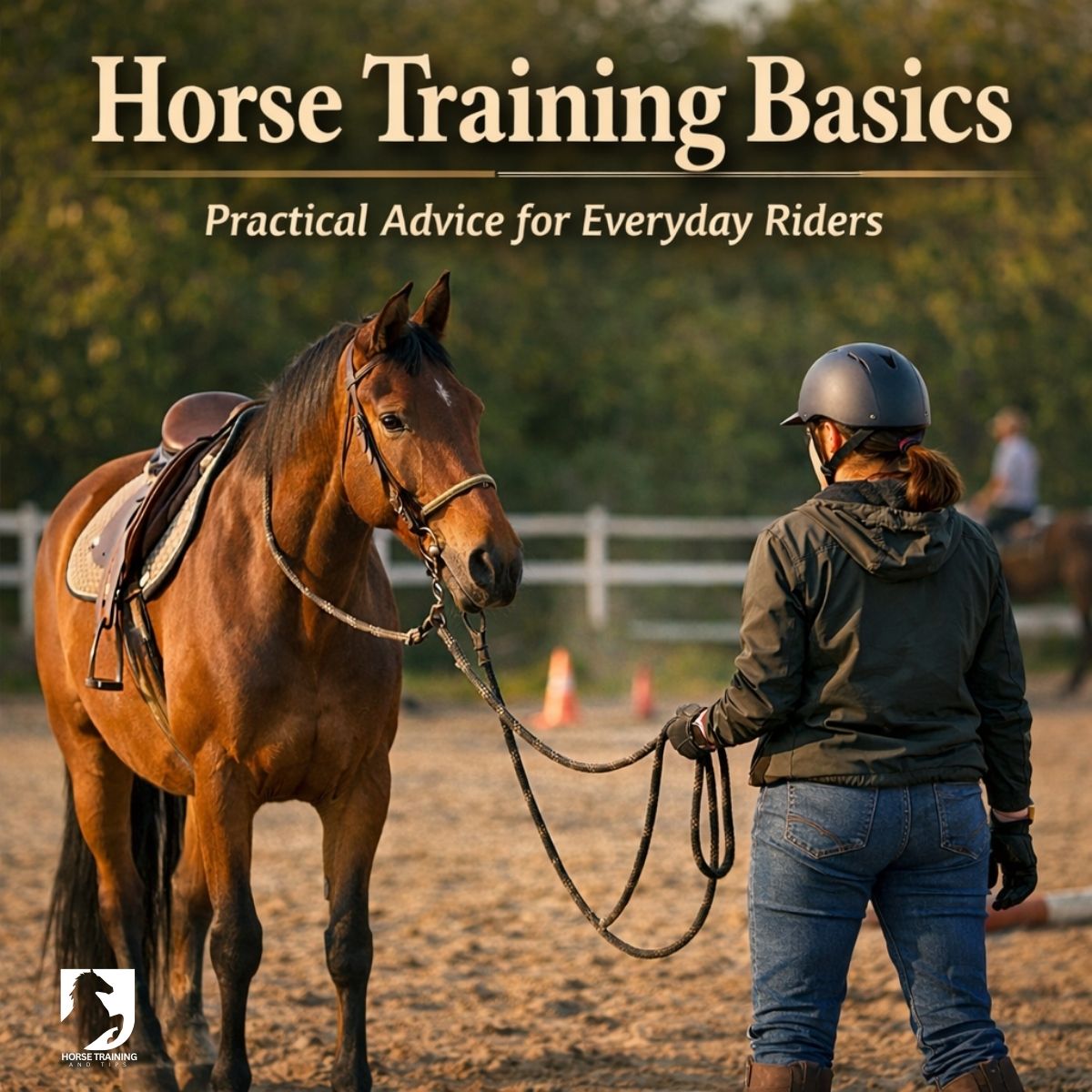
Horse training doesn’t need to be complicated to be effective. For most everyday riders and owners, good training is about clear communication, consistency, and understanding how horses learn — not chasing perfection or copying professional competition routines.
Many training problems don’t start as “bad behaviour”. They start as confusion, discomfort, mixed signals, or gaps in basic understanding. When these aren’t addressed early, they can grow into habits that feel much harder to fix later.
This guide covers horse training basics in a practical, realistic way — focusing on the skills that matter most for safety, confidence, and everyday handling. It’s written by a horse person, for horse people, using methods that work in real yards, not just ideal training environments.
Start Here: Horse Training Foundations
This guide is the main training reference on HorseTrainingAndTips.com.
If you’re looking for calm, practical training advice for everyday horses, this page gives you the foundations.
Throughout this guide, you’ll find links to more detailed training articles that expand on each topic in depth.
What Good Horse Training Really Means
At its core, good horse training means:
- Clear, consistent communication
- Fair expectations
- Attention to comfort and welfare
- Building understanding step by step
Training is not about dominance or forcing compliance. Horses learn best when they feel safe, physically comfortable, and able to understand what’s being asked of them.
A well-trained horse is not one that never makes mistakes — it’s one that knows how to respond calmly when something changes.
How Horses Learn (In Simple Terms)
Horses learn through association and repetition.
They repeat behaviours that:
- Relieve pressure
- Bring comfort
- Make sense to them
They avoid behaviours that:
- Cause discomfort
- Create confusion
- Feel unsafe
This is why timing and consistency matter so much. Even small differences in how something is asked can completely change how a horse responds.
👉 This links closely with behaviour guides such as
Horse Won’t Stand Still for Mounting? Causes and Simple Fixes
The Importance of Basic Ground Training
Ground training forms the foundation of everything else.
A horse that understands:
- how to stand
- how to walk calmly beside a handler
- how to respond to light pressure
will be far easier to train under saddle.
Groundwork isn’t about drilling exercises — it’s about clarity and calm responses.
Common benefits of good groundwork:
- Improved safety
- Better communication
- Increased confidence
- Clearer responses under saddle
Horse Training Topics Covered in This Guide
This guide explains the foundations of calm, practical horse training for everyday owners. If you need more detailed help with specific situations, the guides below expand on each topic in depth.
- Groundwork Essentials: Building Respect and Understanding With Your Horse
- Common Horse Training Mistakes (And How to Fix Them Calmly)
- Rider Balance and Aids: Why Your Position Matters More Than You Think
- How Horses Learn: The Basics of Training and Behaviour
- Horse Won’t Stand Still for Mounting? Causes and Simple Fixes
All of the guides above build on the training foundations explained on this page.
Consistency: The Most Underrated Training Tool
One of the biggest reasons training issues persist is inconsistency.
This includes:
- Different rules with different riders
- Allowing behaviour “sometimes”
- Rushing on busy days
Horses don’t understand exceptions — they understand patterns.
If standing still is only required some of the time, the horse has no clear reason to choose stillness every time.
👉 This is especially relevant in mounting issues:
Why Horses Walk Off When You Mount
Training vs Behaviour vs Pain
One of the most important training skills is knowing when not to train.
If a horse:
- Suddenly resists
- Becomes tense
- Changes behaviour quickly
pain or discomfort should always be ruled out first.
Training through pain creates long-term issues and damages trust.
👉 Related reading:
Is Pain the Reason Your Horse Won’t Stand Still for Mounting?
The Role of Comfort in Training Success
Training works best when:
- Saddle fit is correct
- The horse is physically comfortable
- The rider is balanced and clear
Discomfort often shows up during transitions, mounting, or standing still — moments when pressure changes suddenly.
👉 See:
Does Saddle Fit Affect Mounting Behaviour?
Why Rushing Training Backfires
Many problems come from moving too quickly:
- Asking for too much at once
- Skipping basics
- Expecting instant results
Horses learn best when training is broken into small, repeatable steps.
Progress that feels slow is often the most reliable.
Everyday Training Situations That Matter Most
For most owners, the most important training moments are not advanced movements — they’re everyday tasks:
- Standing still for mounting
- Leading calmly
- Standing quietly to be groomed
- Responding to light aids
- Remaining relaxed in new environments
Training these well improves safety and enjoyment far more than chasing advanced skills.
Training That Builds Confidence (Horse and Rider)
Good training builds:
- Trust
- Predictability
- Confidence
When a horse understands what’s expected, they relax. When a rider feels safe and understood, they ride better. Training should support both sides of the partnership.
When to Get Professional Help
Professional help is valuable when:
- You feel unsafe
- The issue escalates
- You suspect pain or fear
- Progress stalls despite consistency
A good instructor will:
- Look at the whole picture
- Adjust the approach
- Improve clarity rather than add pressure
How This Training Section Is Structured
This Horse Training section will guide you through:
- Understanding how horses learn
- Fixing common training problems
- Building calm, reliable responses
- Improving safety and confidence
Each supporting article dives deeper into a specific issue, all linked together to help you progress step by step.
From One Horse Person to Another
Good horse training isn’t about being perfect — it’s about being fair, consistent, and willing to listen. Most training problems improve when we slow down, simplify the question, and make sure the horse is comfortable and understood.
Strong basics create confident horses, safer riders, and far more enjoyable partnerships.
Related Horse Training Guides
If you are working through training step by step, these guides expand on the topics covered in this foundation guide.
- Groundwork Essentials for Calm, Willing Horses
- Fixing Common Horse Training Problems
- Improving Rider Balance and Communication
- Understanding How Horses Learn and Respond
This page is the main training foundation on HorseTrainingAndTips.com. Each guide above links back here as part of our structured training series.