
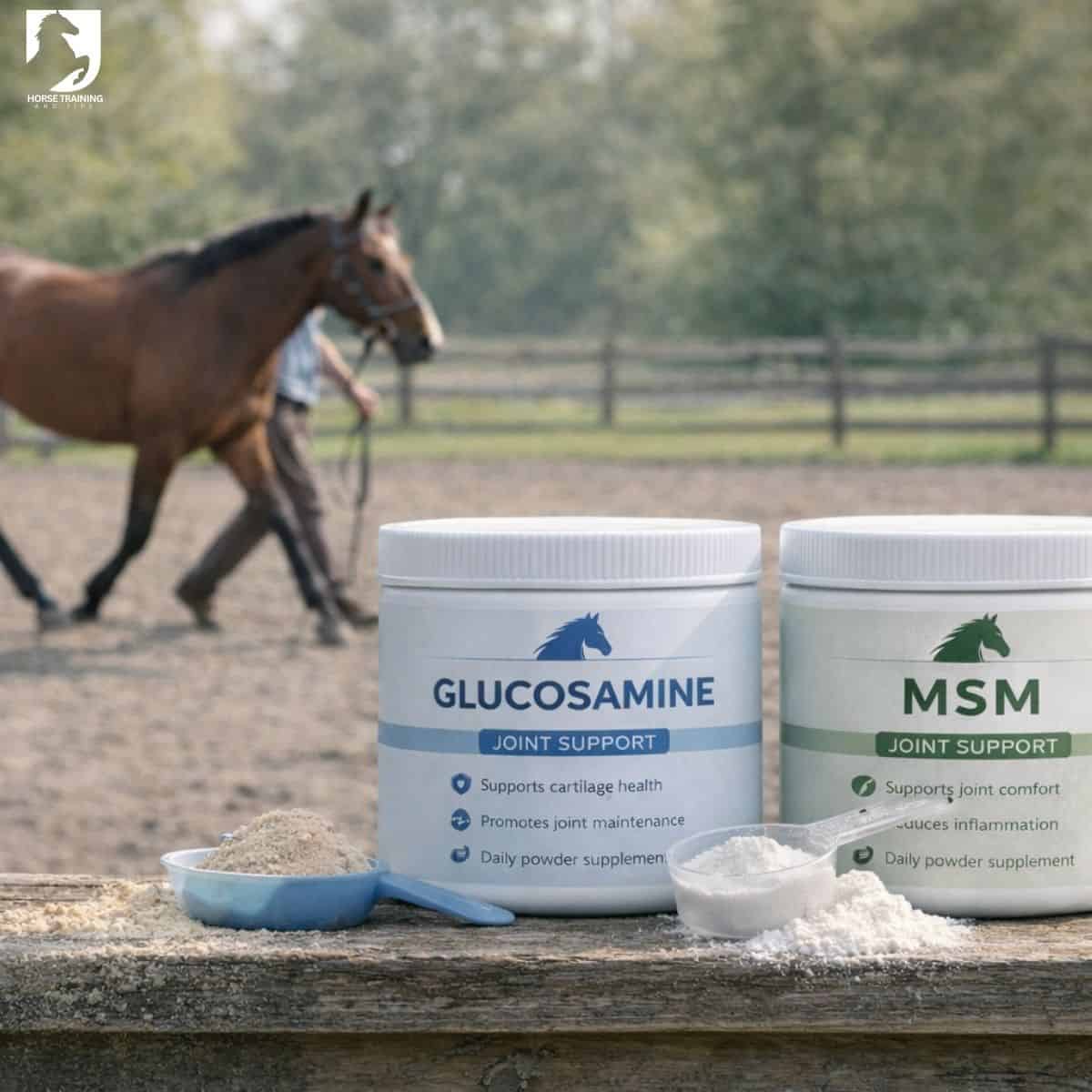
One of the most common questions horse owners ask after starting a joint supplement is:
“How long should this take to work?”
It’s a fair question — joint supplements aren’t cheap, and when a horse feels stiff or uncomfortable, owners naturally want to see improvement quickly. The challenge is that joint supplements don’t all work in the same way, and expecting instant results often leads to disappointment or unnecessary product switching.
This guide explains how long joint supplements take to work in horses, what factors influence results, and how to tell whether a supplement is genuinely helping or simply being given too little time.
👉 This article supports: Best supplements for horse joints
Why Joint Supplements Take Time
Most joint supplements are designed to support long-term joint health, not act as instant pain relief.
They work by:
- Supporting cartilage
- Improving joint lubrication
- Reducing low-grade inflammation
- Supporting connective tissue
These processes happen gradually, which is why patience matters.
If a product claims “results in days”, it’s usually targeting comfort rather than structural support.
Typical Timeframes (Realistic Expectations)
While every horse is different, these are realistic average timelines when supplements are correctly dosed and used consistently.
Short-term comfort ingredients
- MSM
- Boswellia
- Omega-3s
🕒 Expected changes:
2–4 weeks
Owners may notice:
- Easier warm-up
- Less stiffness after rest
- Improved willingness to move
Structural support ingredients
- Glucosamine
- Chondroitin
- Hyaluronic acid
🕒 Expected changes:
4–8 weeks (sometimes longer)
These ingredients support cartilage and joint structure, which naturally takes time.
👉 Ingredient comparison: Glucosamine vs MSM for horses
Why Some Owners See Results Faster Than Others
Several factors influence how quickly a supplement appears to work.
1. The Horse’s Starting Point
A horse with mild stiffness may show improvement sooner than a horse with advanced joint wear.
2. Correct Dosage
Underdosing is one of the most common reasons supplements appear “ineffective”.
Always check:
- Daily active ingredient amounts
- Manufacturer’s loading recommendations
If dosages aren’t clearly stated, results are unlikely.
3. Consistency
Joint supplements only work when given every day.
Missed feeds, inconsistent dosing, or stopping and starting resets progress.
4. Type of Joint Issue
Supplements support joints — they don’t reverse:
- Advanced arthritis
- Severe lameness
- Structural damage
In these cases, improvements may be subtle rather than dramatic.
Loading Periods: Do They Matter?
Some joint supplements recommend a loading period (higher dose for the first few weeks).
Loading can:
- Build ingredient levels faster
- Help owners notice changes sooner
However, loading is only effective if:
- The maintenance dose is still adequate
- The product contains meaningful ingredient levels
Loading a weak supplement won’t produce results.
Signs a Joint Supplement Is Working
Improvements are often subtle at first.
Look for:
- Easier movement out of the stable
- Shorter warm-up time
- Less stiffness after rest
- More consistent way of going
- Improved willingness to work
Sudden dramatic improvement usually suggests pain relief rather than joint support.
Signs a Supplement Is NOT Working
After 8–10 weeks, reassess if you see:
- No noticeable change
- Increased stiffness
- Reluctance to move
- Digestive upset
This may indicate:
- Incorrect supplement choice
- Insufficient dosage
- Underlying issues needing veterinary input
👉 Choosing help: How to choose a horse joint supplement
Should You Stop and Restart to “Test” a Supplement?
Some owners stop a supplement briefly to see if stiffness returns.
This can be useful, but:
- Changes may take weeks to show
- Stopping abruptly can mask gradual benefits
If testing, allow enough time to see genuine changes — not just daily variation.
Joint Supplements vs Pain Relief
Joint supplements:
- Support long-term joint health
- Do not provide immediate pain relief
- Work best as part of good management
Pain relief (e.g. veterinary-prescribed medication) works differently and may be needed in some cases.
Supplements should never delay proper diagnosis.
Supporting Supplements With Good Management
Supplements work best alongside:
- Regular, appropriate exercise
- Good farriery
- Weight management
- Proper warm-up and cool-down
Joint health is always a whole-horse approach.
👉 Natural options: Best natural joint supplements for horses
Older Horses vs Younger Horses
Older horses
- May take longer to show change
- Often benefit from combined ingredients
- Consistency is key
Younger or working horses
- May show improvement sooner
- Often benefit from preventative support
Expectations should match age and workload.
When to Speak to Your Vet
Consult your vet if:
- Lameness persists
- Pain worsens
- There’s no improvement after 8–10 weeks
- Behaviour changes accompany stiffness
Supplements support — they don’t replace veterinary care.
From One Horse Person to Another
Joint supplements aren’t quick fixes — and that’s not a bad thing. When chosen carefully, dosed correctly, and given time, they can play a valuable role in keeping horses comfortable and moving well.
Patience, consistency, and realistic expectations make all the difference.