
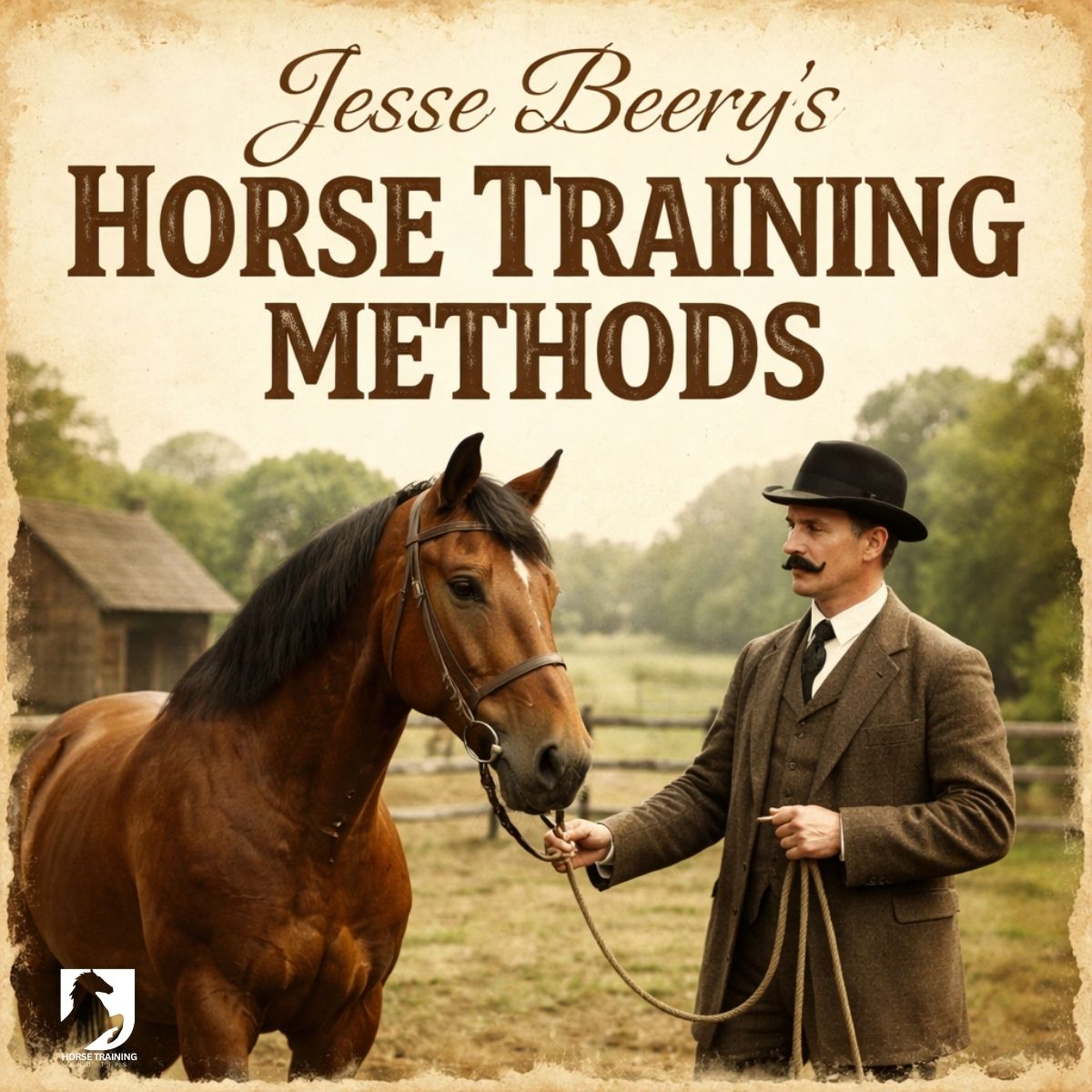
Who Was Jesse Beery?
Jesse Beery was an influential early horse trainer and educator whose work focused on understanding equine behaviour, patience, and systematic training rather than force. At a time when harsh handling was still common, Beery promoted methods that emphasised calm communication and fairness — principles still seen today in modern horse training methods (link to: Horse Training pillar).
Beery’s teachings were widely read in the late 19th and early 20th centuries and continue to be referenced by trainers interested in classical horse training principles
The Core Principles of Jesse Beery’s Training Philosophy
Although horse training has evolved, the foundations of Beery’s methods remain strikingly relevant. His philosophy was built on several key principles that continue to shape effective horse training
Understanding the Cause of Behaviour Before Correction
Beery believed that most training problems stem from confusion, fear, or misunderstanding rather than deliberate disobedience. Before correcting a horse, the handler should first identify the cause of the behaviour.
This approach closely aligns with how trainers today address common horse behaviour problems, focusing on understanding rather than punishment.
Calm, Consistent Handling in Horse Training
A central theme in Beery’s work was consistency. Horses learn best when cues are clear and predictable. Emotional reactions or mixed signals often lead to anxiety, resistance, and long-term training issues.
This principle is still recommended when working with:
- nervous horses
- young horses
- horses with confidence issues
Progressive, Step-by-Step Training Methods
Rather than rushing progress, Beery promoted gradual, structured learning. Each lesson should build logically on the previous one, ensuring the horse fully understands before moving on.
This progressive approach mirrors many modern horse schooling routines and helps prevent behavioural resistance later on.
Jesse Beery’s Approach to Groundwork and Early Training
Groundwork was a cornerstone of Beery’s training philosophy. He viewed groundwork as a way to establish communication and trust, not dominance.
Key elements included:
- Teaching calm responses to pressure
- Encouraging forward movement without fear
- Building respect through clarity
- Resolving issues on the ground before riding
Many modern trainers still rely on effective groundwork exercises for horses because problems under saddle often begin with unresolved groundwork issues.
Training Tools and Their Proper Use
While training tools were common during Beery’s era, he consistently emphasised correct and minimal use. Tools were meant to clarify communication, not replace training.
Beery warned that misuse of equipment could:
- Create resistance
- Mask underlying training gaps
- Increase anxiety or tension
These warnings remain relevant today when addressing training problems caused by equipment misuse (link to: strong horse / equipment-related article).
Jesse Beery’s Methods Compared to Modern Horse Training
Modern horse training benefits from veterinary science and behavioural research, but many of Beery’s core ideas remain unchanged.
Shared principles include:
- Behaviour-first problem solving (link to: horse behaviour pillar)
- Strong foundations through groundwork (link to: groundwork article)
- Calm, consistent handling
- Gradual, structured learning
While modern trainers may use updated tools and science, Beery’s philosophy still underpins many ethical horse training approaches
What Today’s Horse Owners Can Learn from Jesse Beery
Beery’s work offers valuable lessons for modern riders and owners:
- Rushing training often creates long-term issues
- Behaviour problems are usually communication problems
- Calm handling builds confidence faster than force
- Clear cues reduce resistance and anxiety
These principles are especially relevant for owners dealing with difficult or resistant horses
Jesse Beery’s Lasting Influence on Horse Training
Jesse Beery’s legacy lies in his recognition of the horse as a thinking, sensitive animal. His emphasis on patience and understanding helped shape humane training methods that remain influential today.
His work continues to support a more thoughtful approach to training horses correctly from the ground up
From One Horse Person to Another
Jesse Beery’s teachings remind us that good horse training is not about force or control, but about clear communication, patience, and trust — principles that will never go out of date.