
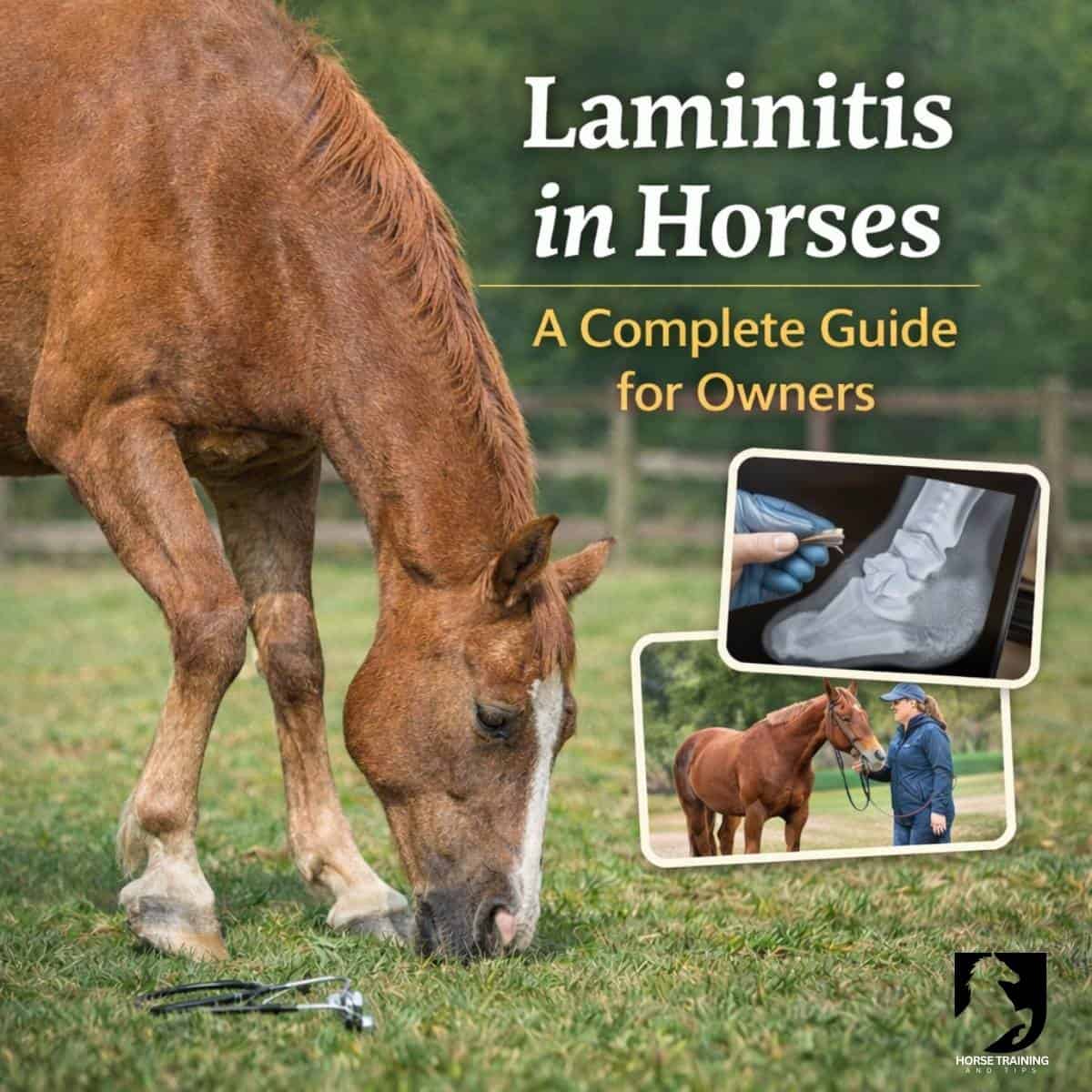
Understanding Laminitis and Why It Happens
Laminitis is one of the most worrying words a horse owner can hear. It’s painful, unpredictable, and often misunderstood — yet it remains one of the most common serious health issues affecting horses, ponies, and donkeys.
Many owners associate laminitis purely with sore feet or grazing too much grass. In reality, laminitis is far more complex. It is a whole-body condition with hoof-based consequences, influenced by metabolism, circulation, hormones, diet, weight, stress, and long-term management choices.
Understanding what laminitis really is — and why it happens — is the first and most important step in protecting your horse.
This guide is written for everyday horse owners, not professionals. There are no shortcuts, miracle cures, or scare tactics here. Just clear explanations, practical insight, and realistic expectations — from one horse person to another.
What Is Laminitis in Horses?
Laminitis is a painful condition affecting the laminae inside the hoof. The laminae are tiny, leaf-like structures that suspend the pedal bone (coffin bone) within the hoof capsule. They act as a shock absorber and weight-bearing support system.
When laminitis occurs, these laminae become inflamed, weakened, or damaged. As they lose strength, they can no longer hold the pedal bone securely in place. This can lead to:
- severe pain
- instability within the hoof
- rotation or sinking of the pedal bone
- long-term structural damage
Despite being felt in the feet, laminitis rarely starts there.
In most cases, laminitis begins inside the horse’s body, triggered by metabolic or inflammatory stress that eventually affects circulation and tissue health within the hoof.
This is why modern veterinary understanding treats laminitis as a systemic condition, not just a hoof problem.
Why Laminitis Is So Serious
Laminitis is serious for three key reasons:
- Pain and welfare impact
Laminitis is intensely painful. Even mild cases cause discomfort that affects movement, behaviour, and quality of life. - Risk of permanent damage
Once the laminae are compromised, structural changes inside the hoof can be permanent. Some horses recover fully, while others require lifelong management. - High risk of recurrence
Horses that have had laminitis once are significantly more likely to develop it again unless underlying risk factors are addressed.
This is why laminitis prevention and early recognition are just as important as treatment.
Laminitis Is Not Just a “Grass Problem”
One of the most common myths is that laminitis is simply caused by too much grass. While grass sugar can absolutely be a trigger, it is rarely the only cause.
Laminitis usually develops when one or more of the following systems are under strain:
- metabolic regulation (insulin and sugar processing)
- circulation and blood flow
- inflammatory response
- hormonal balance
- mechanical load on the hooves
Grass can push a vulnerable horse over the edge — but it is often not the root problem.
This explains why:
- some horses graze rich pasture without issues
- others develop laminitis on restricted turnout
- laminitis can occur in winter with no grass exposure
Understanding why your individual horse is at risk matters far more than focusing on one single trigger.
The Role of the Laminae (and Why They Fail)
The laminae rely on several systems working correctly at the same time:
- healthy blood flow
- stable glucose and insulin levels
- controlled inflammation
- balanced weight distribution
When these systems are disrupted, the laminae are starved of oxygen and nutrients or exposed to damaging inflammatory processes. Over time — or sometimes very quickly — they begin to fail.
Once weakened, the laminae cannot adequately support the pedal bone. Gravity and weight then work against them, leading to rotation or sinking.
This process explains why laminitis can worsen rapidly and why early intervention is critical.
Common Types of Laminitis
Although the end result looks similar, laminitis can develop through different pathways.
Metabolic Laminitis
This is the most common form today.
It is linked to:
- insulin resistance
- Equine Metabolic Syndrome (EMS)
- obesity or “good-doer” tendencies
In these horses, elevated insulin levels directly damage the laminae — even without excessive grass intake.
Inflammatory Laminitis
This form occurs secondary to illness or infection, such as:
- severe colic
- retained placenta
- systemic infections
- endotoxemia
Inflammatory mediators in the bloodstream disrupt circulation within the hoof.
Mechanical Laminitis
Less common, but still significant.
Occurs when:
- a horse overloads one limb due to injury
- prolonged work occurs on hard ground
- hoof balance is poor
This highlights the importance of correct farriery and lameness management.
Which Horses Are Most at Risk?
Laminitis does not discriminate — but some horses are far more vulnerable than others.
Higher-risk horses include:
- ponies and native breeds
- overweight or cresty-necked horses
- older horses
- horses with EMS or PPID (Cushing’s disease)
- horses with a previous laminitis episode
However, any horse can develop laminitis under the right conditions.
This is why assuming “my horse isn’t the type” can be dangerous.
Body Condition and Laminitis Risk
Excess weight is one of the strongest risk factors for laminitis.
Fat tissue is metabolically active. It releases inflammatory substances and interferes with insulin sensitivity. This creates a chronic low-grade inflammatory state — even before visible symptoms appear.
Importantly:
- horses don’t need to look obese to be at risk
- internal fat deposits still matter
- cresty neck fat is a major red flag
Managing body condition is not about aesthetics. It is one of the most powerful tools owners have for laminitis prevention.
Insulin, Sugar, and Why “Small Amounts” Can Matter
In metabolically vulnerable horses, insulin regulation is impaired. This means:
- small sugar intake can cause large insulin spikes
- insulin stays elevated longer than normal
- laminae are exposed to damaging signals
This explains why:
- restricted grazing doesn’t always prevent laminitis
- hay type matters as much as grass
- sudden diet changes increase risk
Laminitis prevention is not about eliminating sugar entirely — it’s about keeping the horse’s metabolic system stable.
Why Laminitis Often Develops Gradually
Laminitis is rarely caused by a single mistake.
More often, it develops as multiple moderate risk factors combine, such as:
- slight weight gain
- reduced exercise
- seasonal grass changes
- mild stress
- subtle metabolic dysfunction
Individually, these factors may seem harmless. Together, they can overload the horse’s system.
This is why owners are often shocked when laminitis appears “out of nowhere”.
Why Early Understanding Matters
By the time lameness is obvious, laminar damage has often already occurred.
Understanding laminitis at this deeper level allows owners to:
- recognise early warning signs
- make informed management decisions
- avoid panic-driven mistakes
- reduce recurrence risk
In the next section, we’ll focus on how laminitis presents, how to spot subtle early signs, and when it becomes an emergency.
Recognising Laminitis Early and Knowing When It’s an Emergency
One of the hardest things about laminitis is that it often develops quietly. By the time a horse is obviously lame, significant damage may already have occurred inside the hoof.
Early recognition can make a dramatic difference to outcome. Horses treated promptly often recover far better than those where signs are missed or dismissed as stiffness, laziness, or “just a bad day”.
In this section, we’ll cover how laminitis actually presents, the early warning signs many owners overlook, and when laminitis becomes a true emergency.
Why Early Laminitis Is Easy to Miss
Laminitis does not always start with obvious lameness.
In many cases, the horse is still walking, still eating, and still behaving relatively normally — just slightly “off”. Because these signs can be subtle, they’re often explained away or noticed only in hindsight.
Common reasons early laminitis is missed include:
- gradual onset rather than sudden pain
- horses masking discomfort
- signs resembling stiffness or mild soreness
- owners unfamiliar with early indicators
Recognising these early clues gives you a crucial window to act before damage worsens.
Subtle Behavioural Changes That Can Signal Laminitis
Behaviour is often the first thing to change.
Early laminitis can cause discomfort before obvious pain, leading to small but meaningful shifts in behaviour.
Watch for:
- reluctance to move forward
- slower, shorter steps
- resistance when being led
- hesitancy to turn tightly
- preference for standing still
- unusual grumpiness or irritability
Some horses become quieter than usual. Others become unsettled or anxious. Neither reaction should be ignored.
Changes in Movement and Posture
As discomfort increases, movement patterns begin to change.
Early movement signs include:
- stiffness, especially on hard ground
- walking “carefully” or gingerly
- shortened stride
- uneven rhythm without obvious lameness
Characteristic laminitis posture
As pain progresses, horses may adopt a classic stance:
- front feet stretched forward
- weight shifted onto hindquarters
- reluctance to stand square
This posture reduces pressure on painful front feet but indicates significant discomfort.
Hoof-Related Signs Owners Often Overlook
Laminitis affects the hoof internally, but external changes often appear early if you know what to look for.
Increased digital pulse
A strong or bounding digital pulse can be felt at the fetlock. This indicates inflammation within the hoof and is one of the most important early signs.
Heat in the hooves
Warm hooves alone are not diagnostic, but persistent or unusual heat — especially combined with other signs — should raise concern.
Sensitivity to hoof testers or hard ground
Horses may flinch when feet are picked up or become reluctant to walk on firm surfaces.
Lameness in Laminitis: Not Always Obvious
Unlike injury-related lameness, laminitis often affects both front feet equally. This can make the horse appear “stiff” rather than lame.
Owners may notice:
- reluctance to walk downhill
- hesitation on turns
- frequent shifting of weight
- lying down more than usual
Because there is no obvious “bad leg”, laminitis can be misinterpreted as age-related stiffness or soreness.
Laminitis Progression: Mild, Moderate, Severe
Understanding severity helps guide urgency.
Mild laminitis
- subtle discomfort
- mild posture changes
- horse still moving willingly
- early intervention highly effective
Moderate laminitis
- clear discomfort
- altered stance
- shortened stride
- veterinary involvement essential
Severe laminitis
- extreme pain
- reluctance or refusal to move
- frequent lying down
- high risk of rotation or sinking
Severity can escalate rapidly, sometimes within hours.
When Laminitis Is an Emergency
Laminitis should always be treated seriously — but some situations require immediate veterinary attention.
Call the vet urgently if:
- pain is increasing
- the horse refuses to move
- severe lameness develops suddenly
- the horse is lying down repeatedly
- digital pulses are strong and persistent
- pain does not improve with rest
Waiting to “see how it goes” can dramatically worsen outcomes.
How Vets Diagnose Laminitis
Diagnosis is based on a combination of:
- clinical signs
- hoof sensitivity
- digital pulses
- posture and movement
- medical history
Imaging
X-rays may be taken to:
- assess pedal bone position
- identify rotation or sinking
- guide farriery decisions
Early x-rays provide a baseline even if changes are not yet severe.
What Owners Should Do Immediately
If laminitis is suspected:
Act quickly but calmly
- remove the horse from grass immediately
- confine to a deeply bedded area
- limit movement unless advised otherwise
- call the vet promptly
Bedding matters
Deep, supportive bedding (shavings or sand) reduces pressure on painful structures.
Do not:
- force exercise
- give pain relief without guidance
- wait for obvious lameness
Early management can prevent catastrophic damage.
Common Owner Mistakes That Worsen Laminitis
Well-meaning actions can sometimes make things worse.
Avoid:
- walking the horse excessively
- delaying veterinary input
- continuing turnout “just for a bit”
- feeding hay without knowing sugar content
- assuming improvement means resolution
Laminitis can fluctuate — temporary improvement does not mean the risk has passed.
Emotional Impact on Owners
Laminitis is emotionally draining. Owners often feel guilt, fear, and confusion, especially if the onset seemed sudden.
It’s important to remember:
- laminitis is complex
- many cases are not preventable in hindsight
- early action matters more than blame
Good decisions now can still protect your horse’s future comfort.
Treating Laminitis, Supporting Recovery, and Preventing Recurrence
Once laminitis has been diagnosed, the focus shifts from recognition to management. This phase is where outcomes are decided — not just for the current episode, but for the horse’s long-term soundness and comfort.
Laminitis treatment is rarely quick, and it is never one-size-fits-all. Recovery depends on how early the condition was caught, how severe the laminar damage is, and how well underlying risk factors are controlled.
This final section explains what treatment actually involves, what recovery realistically looks like, and how owners can reduce the risk of laminitis returning.
Immediate Veterinary Treatment
Veterinary treatment aims to:
- reduce pain
- control inflammation
- support circulation
- prevent further laminar damage
Pain management
Pain relief is essential for welfare. Common options may include:
- non-steroidal anti-inflammatory drugs (NSAIDs)
- carefully controlled dosing plans
Pain control does not cure laminitis — it allows the horse to rest comfortably while damage stabilises.
Anti-inflammatory support
Reducing inflammation helps limit further laminar breakdown. This is especially important in the early stages.
Addressing the trigger
If laminitis is secondary to:
- infection
- retained placenta
- colic
- metabolic imbalance
then treating the primary cause is critical.
Confinement and Rest: Why Movement Matters
Unlike many conditions, laminitis often requires restricted movement, especially early on.
Why rest is important
- movement increases mechanical stress on damaged laminae
- excessive walking can worsen rotation or sinking
- rest allows damaged tissues to stabilise
Controlled movement
In later stages, gentle controlled movement may be reintroduced only under veterinary or farrier guidance.
Forcing exercise too early is one of the most common causes of worsening outcomes.
Hoof Support and Farriery
Correct hoof support is one of the most important elements of laminitis management.
Early hoof support options may include:
- deep bedding (shavings or sand)
- frog support pads
- temporary supportive boots
These help redistribute weight away from damaged laminae.
Long-term farriery
Once the horse is stable:
- trimming focuses on realigning the hoof capsule
- shoeing may be used to support recovery
- radiographs often guide trimming decisions
Laminitis recovery is a team effort between vet, farrier, and owner.
Feeding During Laminitis Recovery
Diet plays a central role — both in recovery and in preventing recurrence.
Forage first
Most laminitic horses require:
- low-sugar, low-starch forage
- soaked hay (when advised)
- carefully weighed rations
What to avoid
- cereal-based feeds
- molasses
- high-sugar treats
- unrestricted grazing
Supplements
Supplements should be chosen carefully. Many marketed products are unnecessary or misleading. Always prioritise:
- mineral balance
- veterinary guidance
- evidence-based choices
Managing Grazing Long-Term
Grazing is often the most challenging aspect for owners.
Common management tools:
- restricted turnout
- track systems
- grazing muzzles
- seasonal pasture avoidance
There is no single “right” system — only what works for your horse’s risk level and lifestyle.
Body Condition Control
Maintaining an appropriate body condition is one of the strongest protective factors against laminitis.
Key principles:
- aim for steady, gradual weight loss if needed
- avoid crash dieting
- monitor body condition score regularly
- track neck crest fat carefully
Weight management is not about perfection — it’s about consistency.
Metabolic Testing and Hormonal Conditions
If laminitis is suspected to be metabolic:
- blood tests may assess insulin regulation
- testing for EMS or PPID may be recommended
Identifying these conditions allows for targeted management, which dramatically improves long-term outcomes.
Recovery Timelines: What to Expect
Recovery varies widely.
Mild cases
- weeks to a few months
- often full return to normal work
Moderate cases
- several months
- careful reintroduction of exercise
Severe cases
- long-term or lifelong management
- some horses return to light work
- others require permanent lifestyle changes
Progress is rarely linear. Good days and setbacks are normal.
Can Horses Fully Recover From Laminitis?
Yes — many horses do recover fully, especially when:
- laminitis is caught early
- underlying causes are addressed
- management is consistent
However, previous laminitis always increases future risk. Prevention becomes a permanent priority.
Preventing Recurrence: The Big Picture
Laminitis prevention is not about eliminating all risk — it’s about reducing cumulative strain on the horse’s system.
Long-term priorities:
- stable routine
- appropriate body condition
- controlled sugar intake
- regular hoof care
- monitoring for early signs
Owners who understand their horse’s individual risk profile are best placed to prevent recurrence.
Emotional Resilience for Owners
Laminitis can be emotionally exhausting. It’s normal to feel:
- overwhelmed
- anxious about the future
- guilty about past decisions
Focus on what you can control now. Calm, informed management makes a real difference.
From One Horse Person to Another
Laminitis is rarely caused by one mistake, one day, or one decision. It develops over time — and it can be managed over time too.
With knowledge, consistency, and support, many horses live comfortable, happy lives after laminitis. This guide exists to help you make informed decisions without fear or panic — because good horse care starts with understanding.