Teaching a horse to stand still for mounting is one of those things many owners assume their horse should “just know”. In reality, standing quietly while a rider climbs aboard is a learned behaviour — and one that needs to be taught clearly and consistently.
If your horse fidgets, steps away, swings their quarters, or walks off as you try to mount, the solution isn’t force or frustration. It’s clear communication, good habits, and calm repetition.
This guide explains how to train a horse to stand still for mounting, step by step, in a way that builds understanding rather than tension. It’s written for real-life UK horse owners, using practical methods that work on everyday yards.
👉 This article supports: Horse won’t stand still for mounting
Before You Start: Rule Out Discomfort
Before beginning any training, it’s essential to make sure your horse is physically comfortable.
Mounting places uneven pressure on the saddle and back. If there is pain or discomfort, training will not succeed.
Check:
- Saddle fit
- Girth comfort
- Back and muscle soreness
- Teeth and general body comfort
If the behaviour appeared suddenly, always rule out pain first.
👉 Related reading: Does saddle fit affect mounting behaviour?
Why Horses Need to Be Taught to Stand Still
Standing still during mounting is not a natural behaviour for horses.
From the horse’s perspective:
- A human climbing up is unusual
- Weight is added suddenly on one side
- Balance feels different
If the horse moves away and the rider still mounts, the horse learns that movement is acceptable. Over time, this becomes habit rather than defiance.
The Golden Rule of Mounting Training
👉 Never mount unless the horse is standing still.
This one rule makes more difference than any other technique.
If you mount while the horse is moving, even slightly, you reinforce the very behaviour you’re trying to fix.
Step 1: Teach Standing Still Away From Mounting
Before involving the saddle or mounting block, teach your horse to stand still on the ground.
How to do this:
- Ask the horse to halt
- Stand quietly beside them
- If they move, calmly reposition them
- Reward stillness with a pause or gentle praise
This builds the idea that standing is the correct response.
Step 2: Introduce the Mounting Block Correctly
A mounting block is one of the most important tools for teaching good mounting behaviour.
Benefits include:
- Less strain on the horse’s back
- Improved rider balance
- Clear visual marker for the horse
Always mount from a block where possible.
👉 Practical guide: How to use a mounting block correctly
Step 3: Break Mounting Into Small, Clear Stages
Many horses struggle because mounting happens too quickly.
Instead, break it down.
Stage-by-stage approach:
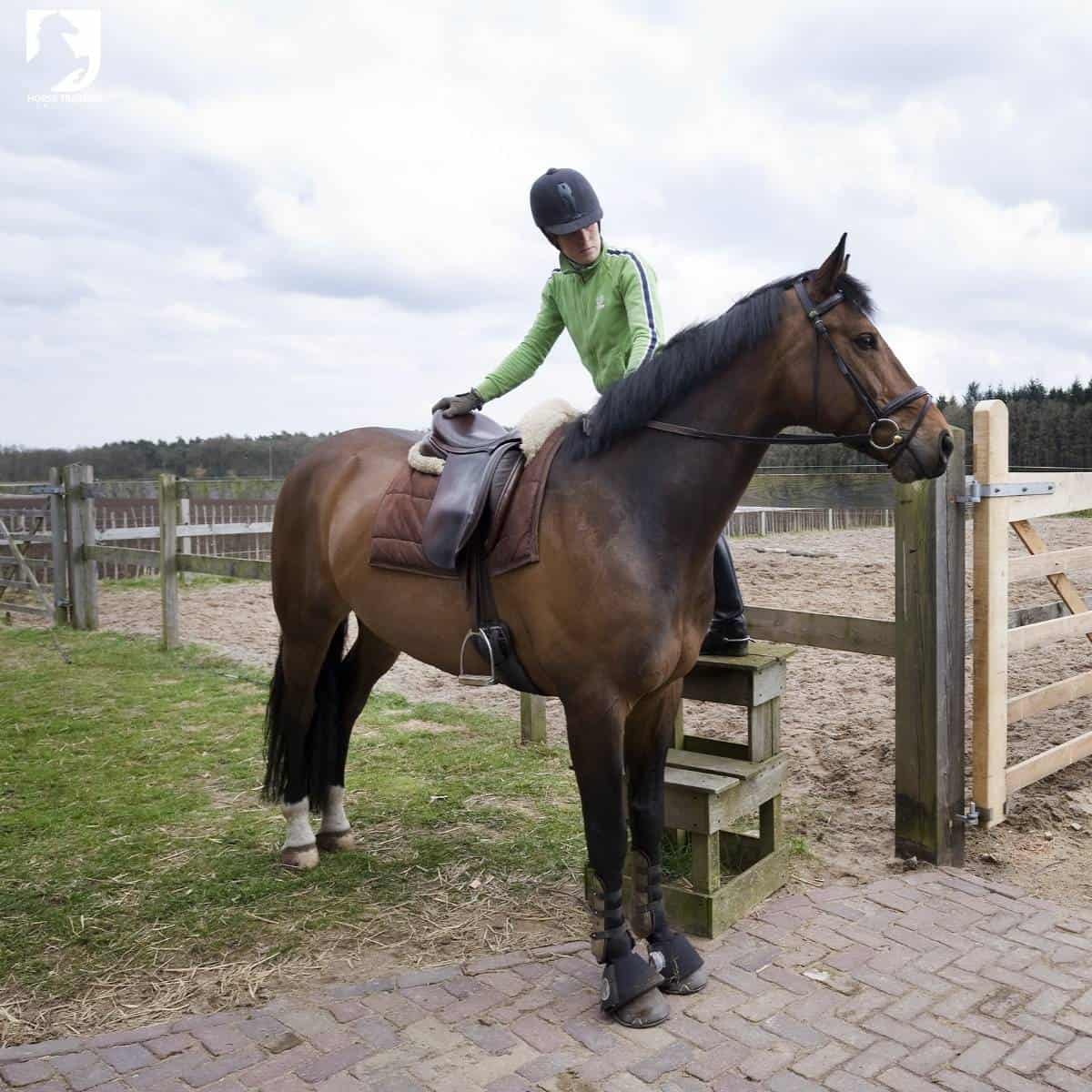
- Walk the horse up to the block
- Ask them to stand
- Step onto the block
- Pause
- Step down again
Repeat until the horse stands quietly throughout.
Step 4: Add Weight Gradually
Once your horse is relaxed with you on the block:
- Place your foot in the stirrup
- Add a small amount of weight
- Pause
- Step back down
Do not rush to get on. The pause is what teaches the horse that standing still is expected.
Step 5: Mount Smoothly and Calmly
When you do mount:
- Avoid pulling on the reins
- Avoid collapsing into the saddle
- Sit quietly for a moment before moving off
Reward the horse by allowing them to stand for a few seconds after mounting.
Step 6: Correct Movement Calmly
If the horse moves:
- Step back down if possible
- Reposition calmly
- Try again
Never punish movement. Calm repetition teaches far faster than correction.
👉 Behaviour insight: Why horses walk off when you mount
Common Mistakes That Slow Progress
Avoid:
- Mounting while the horse is still moving
- Getting frustrated
- Allowing different rules with different riders
- Rushing the process
Consistency matters more than speed.
How Often Should You Practice?
Short, frequent sessions work best.
- Practice a few repetitions each ride
- End on a good attempt
- Avoid drilling until the horse becomes tense
Most horses improve noticeably within a few weeks when training is consistent.
Training Nervous or Sensitive Horses
Some horses move due to anxiety rather than habit.
For these horses:
- Keep sessions short
- Use calm body language
- Avoid pressure
- Reward relaxation
Standing still should feel safe and predictable.
When to Get Help
Seek professional help if:
- The horse shows pain or distress
- The behaviour escalates
- You feel unsafe
A good instructor can often spot small rider habits that make a big difference.
From One Horse Person to Another
Teaching a horse to stand still for mounting isn’t about control — it’s about clarity and comfort. When horses understand what’s expected and feel physically comfortable, most are more than willing to stand quietly.
Take your time, stay consistent, and remember that small improvements add up quickly.