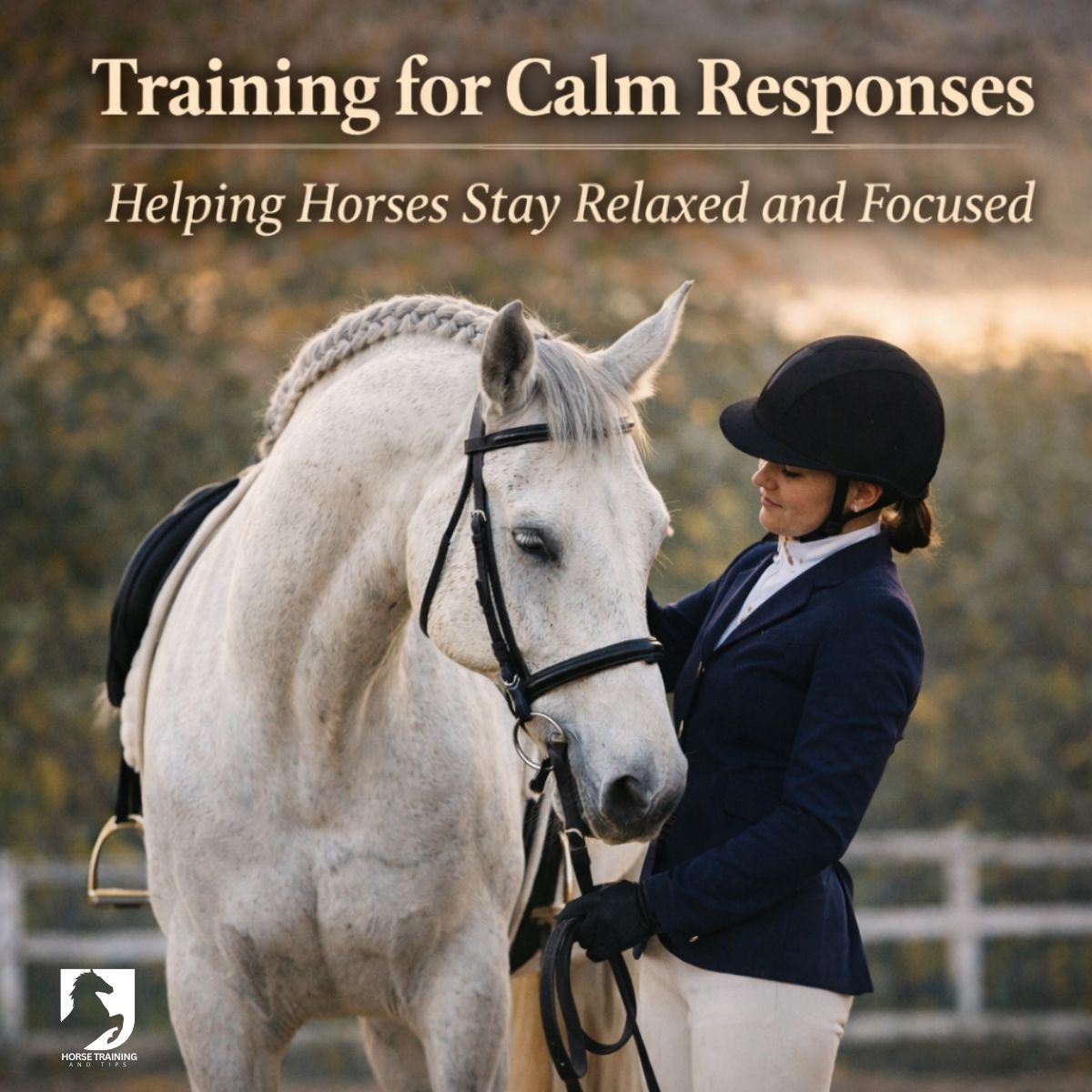
Many training issues don’t come from a lack of ability — they come from tension. A tense horse struggles to listen, learn, and respond calmly, no matter how good the training plan is.
Calmness isn’t something horses either have or don’t have. It’s a trained response, built through consistency, clarity, and thoughtful handling. When training supports relaxation, horses become easier to ride, safer to handle, and far more confident in new situations.
This guide explains how to train calm responses in horses, why calmness matters so much, and how small changes in your approach can make a big difference.
This article supports:
👉 Horse Training Basics: Practical Training Advice for Everyday Riders
Why Calmness Is the Foundation of Good Training
A calm horse can:
- Process information
- Respond thoughtfully
- Recover quickly from mistakes
A tense horse is more likely to:
- Rush
- Spook
- Ignore cues
- React rather than respond
Training doesn’t create calmness by force — it creates calmness by making situations predictable and understandable.
Understanding Tension in Horses
Tension can come from many sources, including:
- Confusion
- Inconsistent aids
- Discomfort or pain
- Rider tension
- New environments
Signs of tension include:
- Tight muscles
- Shallow breathing
- Bracing against the aids
- Loss of focus
Recognising tension early allows you to adjust training before problems escalate.
Calm Responses Are Learned, Not Forced
Horses don’t calm down because they’re told to — they calm down because they learn that:
- The situation is safe
- They understand what’s expected
- Pressure will be released when they respond
Training calm responses means rewarding relaxation, not just obedience.
The Role of Repetition and Predictability
Predictable routines help horses relax.
This includes:
- Similar warm-ups
- Clear cues
- Familiar patterns
When horses know what’s coming next, they feel safer and more confident.
👉 Related reading:
How Horses Learn: The Basics of Training and Behaviour
Why Slowing Down Improves Training
Rushing creates tension.
Slowing down:
- Gives the horse time to think
- Reduces physical strain
- Improves understanding
Even experienced horses benefit from slowing things down when tension appears.
Training Calmness on the Ground
Groundwork is an excellent place to train relaxation.
Helpful exercises include:
- Standing quietly on request
- Slow, controlled leading
- Pausing and waiting
These skills translate directly into calmer behaviour under saddle.
👉 Related reading:
Groundwork Essentials: Building Respect and Understanding
Training Calmness Under Saddle
Under saddle, calmness improves when:
- Rider balance is steady
- Aids are clear and consistent
- The rider stays relaxed
Horses feel every shift in balance and tension.
👉 Related reading:
Rider Balance and Aids: Why Your Position Matters More Than You Think
Calmness and Mounting Behaviour
Mounting is one of the most common times tension appears.
Horses may:
- Walk off
- Brace
- Fidget
Often this is linked to anticipation, imbalance, or discomfort rather than disobedience.
👉 Related reading:
Horse Won’t Stand Still for Mounting? Causes and Simple Fixes
Avoiding the Trap of Over-Correction
Over-correcting tension can make things worse.
Signs of over-correction include:
- Constant nagging
- Increasing pressure
- Frustration
Instead, aim to:
- Reduce the task
- Reward calm moments
- Reset before tension builds
When Calm Training Isn’t Enough
If calm training doesn’t improve behaviour, consider:
- Physical discomfort
- Saddle fit
- Dental or muscular issues
Training through pain prevents relaxation.
👉 Related reading:
Is Pain the Reason Your Horse Won’t Stand Still for Mounting?
Building Calmness Takes Time
Calm responses are built over:
- Repetition
- Fair handling
- Trust
Expect progress in weeks, not days. Calmness grows when training feels safe and consistent.
From One Horse Person to Another
A calm horse isn’t a lazy horse — it’s a confident one. When you prioritise relaxation, clarity, and understanding, training becomes easier for both of you.
Calmness isn’t the absence of energy — it’s controlled, confident focus.