
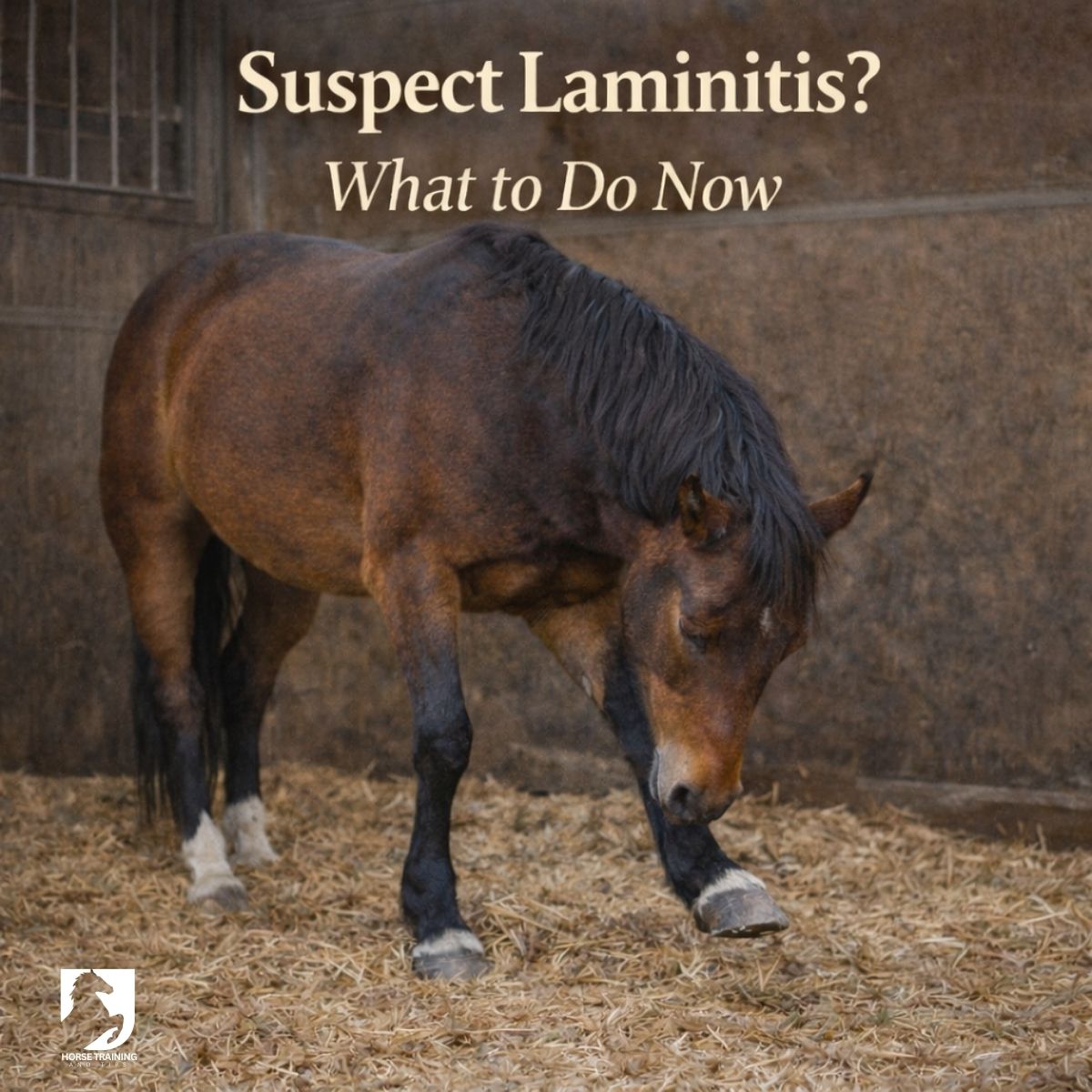
What to Do If You Suspect Laminitis (While Waiting for the Vet)
Suspecting laminitis is one of the most stressful situations a horse owner can face.
The signs may be subtle, you may not be completely sure, and yet you know that acting quickly matters.
While veterinary guidance is always essential, there are important steps you can take immediately to protect your horse while waiting for professional advice or assessment.
This guide explains exactly what to do if you suspect laminitis, what to avoid, and why early action can make a significant difference to outcome.
This article supports our main guide:
Laminitis in Horses: A Practical Guide for Everyday Owners
First: Take the Situation Seriously
Laminitis should always be treated as a potential emergency until proven otherwise.
If you’re unsure how urgent the situation is, this guide explains when laminitis is an emergency and when to call the vet.
Even mild discomfort can indicate early laminar inflammation, and continuing normal routines can worsen internal damage quickly.
If your horse:
- seems reluctant to move
- is shifting weight between feet
- is standing with front feet stretched forward
- feels “off” or uncomfortable
it is safer to assume laminitis is possible and act accordingly.
Step 1: Restrict Movement Immediately
One of the most important actions you can take is to limit movement.
Excess movement increases pressure on already inflamed laminae and can worsen damage inside the hoof.
What to do:
- Bring your horse into a stable if possible
- Use a small, deeply bedded area
- Avoid walking the horse unless absolutely necessary
If stabling is not possible, restrict movement as much as you safely can.
Step 2: Remove Access to Grass
Grass is one of the most common triggers for laminitis, particularly during high-risk periods.
For a deeper explanation of why grass and other factors can trigger laminitis, see what causes laminitis in horses.
As soon as laminitis is suspected:
- remove access to pasture
- do not “wait and see”
- do not assume short grazing is safe
Even small amounts of grass can worsen the condition in susceptible horses.
Hay should be used instead, ideally soaked if recommended by your vet.
Step 3: Provide Deep, Supportive Bedding
Deep bedding helps support the feet and reduces pressure on painful areas.
Best bedding options include:
- deep shavings
- deep straw
- a combination that allows the horse to sink slightly
The goal is to support the entire sole and reduce focal pressure.
Avoid hard surfaces, rubber mats without bedding, or thin bedding layers.
Step 4: Contact Your Vet as Soon as Possible
Laminitis always requires veterinary input.
When you contact your vet:
- describe the signs you are seeing
- explain how long they have been present
- mention any recent changes (grass, feed, weight, illness)
Your vet may:
- advise immediate management steps
- prescribe pain relief
- arrange a visit
- recommend blood tests or further investigation
Early veterinary involvement improves outcomes.
Step 5: Do Not Force Movement “To Test Lameness”
It can be tempting to:
- walk the horse up to “see how bad it is”
- trot up for assessment
- turn the horse out to “loosen up”
This is not recommended when laminitis is suspected.
Laminar damage can worsen even with short periods of forced movement.
Observation at rest is often more informative than movement testing in the early stages.
Step 6: Monitor Digital Pulse and Hoof Temperature
Checking the digital pulse can provide useful information while waiting for the vet.
You may notice:
- a stronger-than-normal pulse
- warmth in the hooves
These signs do not confirm laminitis on their own, but they support suspicion when combined with other symptoms.
Learn what is normal for your horse so changes are easier to detect.
Step 7: Avoid Giving Unprescribed Medication
Do not:
- give pain relief intended for humans
- use leftover veterinary medication
- increase existing doses without guidance
Incorrect medication use can mask symptoms or cause harm.
Always follow veterinary advice when administering medication.
Step 8: Keep the Horse Calm and Comfortable
Stress can worsen inflammation.
While waiting for veterinary input:
- keep routines calm and quiet
- avoid unnecessary handling
- ensure water is easily accessible
- minimise disturbances
A calm environment supports recovery and assessment.
What Not to Do If You Suspect Laminitis
Avoid:
- turning the horse out “to see if it improves”
- exercising to test soundness
- delaying action until symptoms worsen
- assuming mild signs mean it is not serious
Laminitis can progress rapidly, and early caution is always safer.
Why Early Action Makes a Difference
Laminitis outcomes are strongly influenced by how quickly management changes are made.
Early action can:
- reduce pain
- limit internal damage
- improve recovery chances
- prevent long-term soundness issues
Many severe cases begin as mild discomfort that was not acted on early enough.
Early management also plays a major role in long-term outcome. This article explains whether horses can fully recover from laminitis and what recovery really looks like.
From One Horse Person to Another
Suspecting laminitis is frightening, especially when signs are subtle and uncertainty is high.
Acting early, restricting movement, and involving your vet promptly gives your horse the best possible chance — even if it later turns out not to be laminitis.
It is always better to be cautious than to wait.